There’s something about the sizzle of marinated steak hitting a hot pan that instantly reminds me of my college days—and honestly, my go-to comfort food that somehow always made even boring weeknights feel special. Korean steak bowls have become my lifesaver when I need something quick, filling, and with those addictive flavors that keep my whole family asking for seconds. Think of these bowls like a happy marriage between tender, garlicky beef and perfectly steamed rice, topped with crisp veggies and a drizzle of sweet-spicy sauce that’s just irresistible. If you’ve ever loved a beef stir-fry or a good burrito bowl, you’re going to appreciate how these Korean steak bowls pack all that same comfort but with a killer, savory twist that feels a bit exotic yet familiar. Trust me, once you make these, they’ll be on repeat—you can almost smell that garlicky goodness already, right?
What is Korean Steak Bowl?
Korean steak bowls, at their heart, are a simple yet incredibly satisfying dish—a bowl of tender, flavorful beef served over a bed of rice, often accompanied by fresh or pickled veggies, and finished with a punchy sauce that brings everything together. The name hints at the star ingredient: steak, typically marinated in traditional Korean flavors like soy sauce, garlic, sesame oil, and a touch of sweetness from brown sugar or honey. It’s essentially a vibe—a balanced combination of juicy meat and wholesome sides, all in one bowl for easy eating. If you think of classic Korean barbecue, Korean steak bowls capture that same magic but turn it into a quick, casual meal you can whip up at home without any fancy grill or special gear. It’s approachable, heartwarming, and just packed with flavor.
Why you’ll love this recipe?
What I love most about these Korean steak bowls is the way they hit every note you didn’t realize you wanted in a dinner. First of all, the flavor is out of this world—there’s this perfect balance of savory umami from the soy sauce, a gentle sweetness from the sugar, and a little kick from some chili flakes or gochujang if you’re feeling adventurous. I swear, the smell alone will have everyone crowding the kitchen.
But here’s the best part: these bowls are ridiculously simple to throw together. You don’t need a ton of fancy ingredients or hours to prep. I usually have everything on hand, and they come together in under 30 minutes. It’s a win for those busy weeknights when you want something impressive but not a hassle. Plus, it’s budget-friendly since you’re mostly working with steak strips, rice, and fresh veggies—nothing too pricy or complicated.
And talk about versatile! You can swap the steak for chicken, tofu, or even shrimp, and it still hits the spot. Sometimes I load mine up with sautéed mushrooms or a fried egg on top when I’m feeling extra. It’s also great for meal prep; you can make a big batch and just grab individual portions during the week. If you’ve ever loved recipes like burrito bowls or teriyaki beef bowls, this is right up your alley but with that deliciously fresh Korean twist that keeps things exciting.
How do I make Korean Steak Bowls?
Quick Overview
Honestly, making Korean steak bowls is one of those things that feels fancy but is really a breeze. You start with a simple marinade that infuses thin slices of steak with garlicky, sweet, and salty goodness. Then you sear those slices over high heat until they’re perfectly caramelized, assemble them over fluffy white rice, and top with crunchy veggies and a vibrant sauce. The whole process is quick and mostly hands-off once that steak’s cooking. It’s my go-to when I want a dinner that feels like it came from a restaurant but was made in my own kitchen—minus any stress.
Ingredients
For the Steak Marinade:
- 1 lb flank or sirloin steak, thinly sliced against the grain (these cuts stay tender and soak up marinade well)
- 3 tablespoons soy sauce (go for a low-sodium if you prefer)
- 1 tablespoon sesame oil (to add that toasty, nutty depth)
- 1 tablespoon brown sugar or honey (for a touch of sweetness that caramelizes)
- 3 cloves garlic, minced (the more, the better for that punch)
- 1 teaspoon grated fresh ginger (optional but adds a lovely zing)
- 1 teaspoon rice vinegar or mirin (brightens the marinade)
- A pinch of black pepper and chili flakes or a teaspoon of gochujang (for some heat)
For the Bowl:
- 2 cups steamed white rice (short grain or jasmine work wonderfully)
- 1 cup shredded carrots or thinly sliced cucumber (fresh and crisp for contrast)
- 4 scallions, sliced thinly
- 1 cup kimchi (optional but really adds that authentic tang)
- Sesame seeds for garnish
- Optional: a fried egg or sautéed mushrooms for an extra layer of yum
For the Sauce:
- 2 tablespoons soy sauce
- 1 tablespoon gochujang (Korean chili paste) or sriracha
- 1 teaspoon honey or brown sugar
- 1 teaspoon sesame oil
- 1 teaspoon rice vinegar
- 1 teaspoon water (to thin if needed)
Step-by-Step Instructions
Step 1: Preheat & Prep Pan
Start by heating a large skillet or cast iron pan over medium-high heat—get it nice and hot so the steak gives you that perfect sear. If you have a grill pan, even better; it gives those lovely char marks that make it feel extra special. No oil in the pan yet! We want a dry, smokey sear.
Step 2: Mix Dry Ingredients
Since most of the dry ingredients for the marinade are just the brown sugar and chili flakes, mix those together first in a small bowl so they can start softening up. This ensures the sugar distributes evenly when combined with liquids.
Step 3: Mix Wet Ingredients
In a separate bowl, combine soy sauce, sesame oil, rice vinegar, garlic, grated ginger, and any chili or gochujang you’re using. Stir until the sugar dissolves and everything looks shiny and thick. This is your flavor powerhouse.
Step 4: Combine
Toss the steak slices into the marinade, making sure each piece is well coated. I like to use my hands here—it’s messy but makes sure every inch gets that love. Let it sit for at least 15 minutes if you can, or cover and refrigerate for up to 2 hours if you plan ahead. Trust me, the longer the better for maximum flavor.
Step 5: Prepare Filling
While the steak marines, prep your veggies. Thinly slice the scallions, shred or julienne the carrots, and if you like kimchi, have it ready to go. If you want mushrooms or eggs, get those started now too. This is when your kitchen starts smelling amazing.
Step 6: Cook the Steak
When your pan is screaming hot, add the steak slices in a single layer (you might have to do it in batches). Let them sear undisturbed for 1-2 minutes until you see that caramelized crust form, then flip and cook the other side quickly. The steak cooks fast! You want it just shy of well-done so it stays juicy and tender.
Step 7: Assemble the Bowls
Divide the freshly steamed rice into bowls. Top with the warm, caramelized steak, then layer on the fresh vegetables and kimchi. Drizzle your sauce on top—if it’s too thick, add a splash of water to loosen before drizzling. Sprinkle sesame seeds for that final nutty crunch.
Step 8: Garnish & Serve
If you’re going extra fancy (and why wouldn’t you?), add a fried egg on top—the yolk adds this rich creaminess that’s downright dreamy. Serve immediately while everything’s warm, and get ready for the unanimous “wow!” these bowls always get at my table.
What to Serve It With
For Breakfast: These Korean steak bowls make a game-changing brunch option—serve with a cup of bold, black coffee or a nutty matcha latte. The savory meat and rice make for a hearty start, especially topped with a runny egg.
For Brunch: Plate these bowls alongside simple pickled radishes or a fresh green salad with ginger dressing. A crisp sparkling water with lime or even a light Korean rice wine (makgeolli) pairs surprisingly well if you’re feeling adventurous.
As Dinner: Focus on simplicity—add a side of steamed or sautéed greens like bok choy or spinach. Classic Korean banchan (side dishes), like kimchi or pickled cucumbers, bring brightness and deepen the flavor party.
For Cozy Snacks: Leftover Korean steak bowls make for amazing snack bowls or informal evening meals. I like warming up leftovers, topping them with a quick fried egg, and enjoying them with a cup of earthy green tea or jasmine tea—so comforting!
At home, we usually snack on these throughout the week and love mixing it up by throwing in whatever seasonal veggies I find at the market. This recipe feels both comforting and fun—like you’re spoiling yourself without the fuss.
Top Tips for Perfecting Your Korean Steak Bowls
Steak Prep: Slice the steak thinly against the grain right before marinating to ensure it stays tender. I learned this the hard way after some chewy batches early on! If your meat’s a little thick, pound it gently with a meat mallet for an even texture.
Marinade Magic: Don’t skip the marinating time. Even 15 minutes makes a world of difference, but if you can let it rest for an hour or two, the flavors deepen and the steak literally kisses the marinade.
Cooking Technique: A screaming hot pan is a must! I always make sure to let the steak sear undisturbed to get that beautiful, slightly crispy crust. Avoid overcrowding the pan—work in batches to keep everything caramelizing instead of steaming.
Sauce Balance: Tweak your sauce between sweet, spicy, and tangy based on your mood. Adding more gochujang kicks up the heat, or you can tone it down with extra honey. If your sauce gets too thick, a splash of water or rice vinegar smooths it right out.
Veggie Variations: Feel free to swap veggies—spicy kimchi is my favorite, but fresh shredded cabbage, sliced radishes, or quick-pickled cucumbers add great crunch and brightness.
Glaze Alternatives: If you’re not sold on the chili paste sauce, try a simple sesame-soy glaze or even a miso-based dressing. Trust me, I’ve experimented a lot here, and little tweaks let you tailor the bowls to your taste every time.
Storing and Reheating Tips
Room Temperature: If you’re planning to eat within a few hours, covering the bowls lightly with foil or a clean towel keeps them fresh and warm enough without drying out, but don’t leave them out for more than 2 hours due to the meat.
Refrigerator Storage: Store components separately for best results—keep the cooked steak and rice in airtight containers, and fresh veggies and sauce in small jars. Meat and rice last about 3-4 days safely refrigerated.
Freezer Instructions: You can freeze the cooked steak and rice portions wrapped tightly in freezer-safe bags or containers for up to 2 months. Thaw overnight in the fridge and then reheat gently in a pan or microwave for best texture.
Glaze Timing Advice: I usually hold off on drizzling the sauce until serving, especially when storing leftovers, to prevent the rice from turning mushy. If you want it ready to go for meal prep, keep the sauce in its own container and mix in just before eating.
Frequently Asked Questions
Final Thoughts
There’s just something so satisfying about Korean steak bowls that makes them a staple in my house now. They’re easy, comforting, and have a flavor punch that feels like a little celebration every time you sit down to eat. I keep coming back to this recipe because it’s both familiar and exciting—the kind of meal you want to share with friends or family after a long day. Plus, they’re endlessly customizable, so you never get bored. I really hope you give it a try and see how it fits into your weekly dinner rotation. Drop a comment or share your own twists—I’d love to hear how yours turns out! Happy cooking and even happier eating!
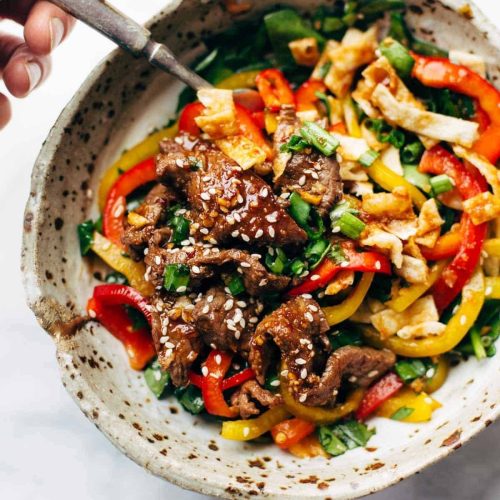
Korean steak bowls
Ingredients
Main Ingredients
- 0.67 cup low sodium soy sauce
- 0.25 cup mirin
- 1 tablespoon fresh minced or crushed ginger
- 1 tablespoon toasted sesame oil
- 2 tablespoons brown sugar
- 1.5 tablespoons sambal oelek (spicy chili paste)
- 5 cloves garlic minced
- 1 pound top sirloin steak thinly sliced
- 2 units bell peppers (red and yellow) cut into strips
- 2 handfuls spinach
- to taste wonton strips
- to taste scallions sliced for topping
- to taste sesame seeds for garnish
Instructions
Preparation Steps
- Combine soy sauce, mirin, ginger, sesame oil, brown sugar, sambal oelek, and minced garlic in a food processor and pulse until smooth. Place sliced steak in a resealable bag and pour in the marinade. Refrigerate for 1-2 hours while prepping vegetables.
- Heat a heavy skillet over high heat. Remove steak from marinade, discard excess marinade, and sear steak pieces in the hot skillet for 1-2 minutes until golden brown. Adjust cooking time to preferred doneness.
- Toss cooked steak, bell peppers, and spinach together with some remaining dressing until everything is coated well. Add wonton strips and scallions just before serving. Garnish with sesame seeds.