Okay, deep breath, because I’m about to let you in on a secret. You know how sometimes a recipe blows up online, and you think, “There’s no way it’s actually that good”? That’s exactly what I thought about the famous feta pasta. I resisted the hype for months. I mean, throwing a block of cheese and some tomatoes in a pan? Sounded too easy to be truly spectacular. But one Tuesday night when the kids were grumpy, the fridge looked sad, and I needed dinner on the table in under an hour, I finally gave in. Folks, I was wrong. So incredibly wrong. That first bite—the salty, creamy feta mingling with the blistered, sweet tomatoes and fresh basil—was pure magic. If you’ve been looking for the ultimate crowd-pleaser that requires almost zero effort, this Baked Feta Pasta. Baked Feta Pasta.Is your new best friend the closest thing to a weeknight miracle I have ever found?
What is baked feta pasta?
If you’ve somehow managed to avoid the internet tornado this recipe created, let me break it down for you. Think of it as the easiest, most flavorful two-part dinner you’ll ever make. It’s essentially a deconstructed pasta sauce. You take a block of good quality feta cheese—the kind packed in brine, please, none of that dry pre-crumbled stuff—and you nestle it in the middle of a baking dish, surrounded by cherry or grape tomatoes. You drizzle everything liberally with olive oil, maybe throw on some garlic cloves and a heavy sprinkle of red pepper flakes (if you like a little kick, which, obviously, you should), and then you just bake it. What happens in that oven is pure alchemy. The feta softens into this ridiculously creamy, tangy base, and the tomatoes burst and caramelize, turning into the sweetest, richest sauce imaginable. When it comes out, you mash it all together with your cooked pasta. It’s essentially gourmet comfort food that tastes like you slaved over a stove all afternoon, but really, the oven did all the heavy lifting. It’s genius in its simplicity!
Why you’ll love this recipe?
I’ve been cooking for what feels like a hundred years, and very few things impress me with their sheer efficiency and massive flavor payoff, but this Baked Feta Pasta nails it every single time. What I love most about this is that it frees up my brain space on stressful evenings. You don’t need to babysit a sauce on the stovetop, stirring every two minutes. You put it in, go unload the dishwasher, help with homework, or just stare blankly at the wall for twenty minutes, and then BAM—dinner is done. The flavor profile is just stunning. You get that wonderful salty punch from the feta, which is perfectly balanced by the natural sweetness of those oven-roasted tomatoes. It’s rich without feeling heavy, especially if you use whole wheat pasta or load it up with fresh herbs afterward. Secondly, it’s so ridiculously budget-friendly. Feta, tomatoes, pasta, oil—these are staples I usually have on hand. It tastes like a dish you’d pay $25 for at a trendy Italian spot, but it costs pennies to make at home. Finally, it’s a chameleon! If you don’t like tomatoes, swap them out for roasted red peppers or even some chopped sweet potato. If you’re vegetarian, this is already perfect, but if you’re a meat lover, tossing in some Italian sausage right alongside the feta before baking adds another layer of savory depth that my husband raves about. This isn’t just dinner; it’s an effortless kitchen win, and honestly, that’s priceless.
How to Make Baked Feta Pasta
Quick Overview
The whole process hinges on one pan and the magic of high heat. We’re essentially creating a fast, deeply flavorful sauce base while the pasta boils. You’ll arrange the feta and tomatoes in your dish, season aggressively, bake until everything is soft and bubbling, and then combine it all with hot pasta and a splash of that starchy pasta water we always save. It takes about 35 minutes total, and the majority of that time is hands-off. Trust me, even if you’re usually intimidated by cooking, this recipe makes you look like a culinary rockstar. You really can’t mess it up!
Ingredients
For the Main Batter:
2 pints cherry or grape tomatoes (The sweeter, the better. I always look for the ones that are deep red, not pale.)
8 ounces block of good quality Feta cheese (Get the brine-packed kind. It makes all the difference in creaminess.)
4 cloves fresh garlic, peeled and left whole (Don’t chop them! They roast perfectly this way.)
1/4 cup high-quality extra virgin olive oil (Since this is the main fat, use the nice stuff you save for finishing.)
1 teaspoon dried oregano (This brings in that Mediterranean vibe.)
1/2 teaspoon crushed red pepper flakes (Adjust this based on your spice tolerance—I usually use a full teaspoon.)
Coarse salt and freshly ground black pepper (Be mindful of the salt, as feta is already salty!)
For the Filling:
1 pound pasta (I prefer rigatoni or penne so the sauce really clings, but spaghetti works too.)
1/2 cup reserved starchy pasta water (This is crucial for emulsifying the sauce later!)
For the Glaze:
1/4 cup fresh basil leaves, roughly chopped (Don’t skip the fresh herbs—they brighten everything up.)
1 tablespoon extra virgin olive oil (For drizzling right before serving.)
Step-by-Step Instructions
Step 1: Preheat & Prep Pan
Set your oven rack to the middle position and preheat that oven to a hot 400°F (200°C). Grab a medium-sized baking dish—mine is 9×13, but anything deep enough to hold everything snugly works well. Lightly coat the bottom of the dish with about a tablespoon of your olive oil.
Step 2: Mix Dry Ingredients
In the baking dish, arrange your tomatoes. Try to keep them clustered around the edges so you have a nice open space in the center. Place the entire block of feta right in the middle. Scatter the whole garlic cloves amongst the tomatoes. This step is about creating the perfect landscape for baking!
Step 3: Mix Wet Ingredients
This is where we season. Drizzle the remaining olive oil—about 3 tablespoons—over the tomatoes and feta. Sprinkle evenly with dried oregano, red pepper flakes, a generous crack of black pepper, and just a tiny pinch of salt over the tomatoes (remember, the feta is salty). Don’t worry too much about coating the feta perfectly; it will melt everywhere soon enough.
Step 4: Combine
While your oven is heating up, get a large pot of salted water boiling vigorously. Add your pasta and cook it according to the package directions, but pull it out about 1 minute *before* it reaches al dente. Just before draining, scoop out at least a full cup of that starchy, cloudy water and set it aside. Drain the pasta well.
Step 5: Prepare Filling
This step actually happens simultaneously with the baking, but it’s good to have your basil chopped and ready to go for the finale. If you are adding protein or veggies (like pre-cooked sausage or sliced peppers), mix them into the tomatoes now.
Step 6: Layer & Swirl
The dish should now be ready for the oven. Place the baking dish on a sheet pan just in case anything bubbles over (a lesson learned the hard way in my early days!). Pop it into the preheated 400°F oven. Now, go start cleaning up or setting the table!
Step 7: Bake
Bake for about 30 to 35 minutes. You’ll know it’s done when the tomatoes are completely soft, some are starting to shrivel and burst, and the feta is soft, pale gold on top, and looks ready to collapse. If the feta isn’t looking golden enough, you can quickly switch the oven to broil for the last 1-2 minutes, but watch it like a hawk—feta burns fast!
Step 8: Cool & Glaze
Carefully remove the piping hot dish from the oven. Let it sit for about 5 minutes—this prevents splashing when you mash it. Add the cooked, drained pasta directly into the baking dish, right on top of the cheese and tomatoes. Add about 1/2 cup of the reserved pasta water.
Step 9: Slice & Serve
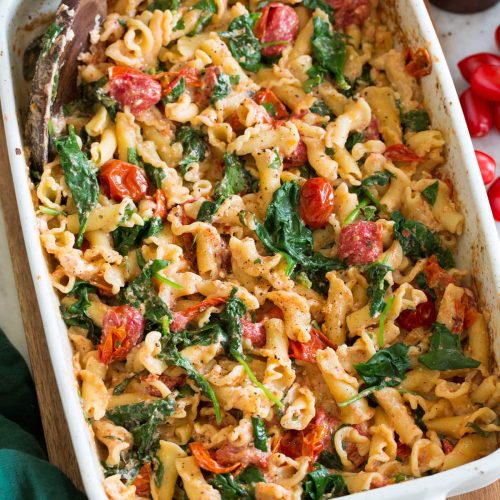
This is the fun part! Take a sturdy fork or a wooden spoon and start mashing and stirring everything together right there in the pan. The melted feta will mix with the tomato juices and the starchy water to create a luxurious, creamy sauce that coats every piece of pasta. If it seems too thick, add a little more pasta water, a tablespoon at a time, until it’s perfectly glossy. Stir in most of your fresh basil, give it a final taste test for seasoning (it probably won’t need much salt!), and then transfer to bowls. Drizzle each serving with a bit more olive oil and top with the remaining fresh basil. My kids love when I break up the roasted garlic cloves and mix them in for extra flavor!
What to Serve It With
This Baked Feta Pasta is such a complete meal in itself—rich, comforting, and satisfying—that you don’t really *need* much else, but I always like to add something green or crunchy to cut through the richness. For a casual weeknight dinner, a simple side salad tossed with lemon vinaigrette is my go-to. It offers that sharp, acidic counterpoint that makes the richness of the cheese sing. We usually call that “salad night” around here. If you’re serving it for brunch, though, things get a little fancier. I love plating it beautifully in shallow bowls and serving it alongside crusty, toasted sourdough bread—perfect for soaking up any leftover creamy sauce. For beverages, a crisp, chilled Pinot Grigio works beautifully if you’re having it as a main course, or skip the alcohol and opt for sparkling water infused with cucumber and mint; it’s incredibly refreshing. When we have it as a cozier, late-night snack, I sometimes just dust the top with a tiny bit of smoked paprika instead of basil, which gives it a completely different, warmer profile. Honestly, as long as you have something fresh to balance the savory, you’re golden.
Top Tips for Perfecting Your Baked Feta Pasta
I mentioned I’ve made this countless times, and that means I’ve made all the mistakes so you don’t have to! Here are the secrets I’ve gathered over the years:
Zucchini Prep: Wait, wrong recipe! But seriously, let’s talk feta prep. Always use the block feta in brine. If you try to use the dry, pre-crumbled stuff, it will seize up and taste chalky instead of melting into silk. If you can only find the block, let it sit on the counter for about 30 minutes before baking; room temperature cheese melts more evenly.
Mixing Advice: The biggest rookie mistake is over-mashing. You want those little pockets of concentrated tomato goodness mixed with the creamy feta. Don’t pulverize it into a homogenous paste. Stop stirring when it looks creamy but still has visible texture from the broken-down tomatoes. Remember, the pasta water is your best friend; use it slowly until you hit that perfect coating consistency. Too much pasta water, and it gets soupy; too little, and it’s clumpy.
Swirl Customization: While the traditional method is just shoving the block in the middle, if you want extra visual appeal, you can slice the feta block into three thick discs before baking. Lay the discs down with the tomatoes nestled in between them. When you stir it later, you get beautiful ribbons of pure feta mixed with chunky tomato sauce, rather than one big blob.
Ingredient Swaps: People ask about adding protein all the time. If you add raw chicken or pork, cut it into bite-sized pieces and toss it with oil and seasoning before adding it to the pan; it needs about 40 minutes to cook fully, so make sure it’s safe to eat. For veggies, eggplant cubes soak up the oil beautifully, but add them in halfway through baking so they don’t burn.
Baking Tips: Seriously, use a sheet pan underneath. I once had a tomato decide to pop open spectacularly and leak all over my oven floor—cleanup was not worth the five extra seconds it takes to place a baking tray underneath. Also, don’t be afraid of high heat; this dish needs that 400°F blast to properly blister the tomatoes and soften the cheese quickly.
Glaze Variations: My current obsession is swapping the fresh basil for fresh parsley and adding a tiny drizzle of balsamic glaze right at the end. It gives it a little tang that cuts the richness beautifully. If you want a little more heat, sprinkle some fresh chili flakes over the top *after* baking instead of using the dried ones beforehand.
Storing and Reheating Tips
This is where my family’s routine comes in handy. We always make too much because everyone goes back for seconds, and this reheats surprisingly well, provided you store it correctly. For short-term storage, keep any leftovers in an airtight container at room temperature for no more than two hours—pasta doesn’t love sitting out, especially with creamy sauces.
Refrigerator Storage: For up to four days, store the leftover Baked Feta Pasta in a sealed container in the fridge. The sauce will firm up considerably because the fats solidify. When reheating on the stovetop, I always transfer it to a small saucepan, add a splash of milk or water—about a tablespoon per serving—and heat gently over medium-low heat, stirring constantly until creamy again. Microwaving works too, but always add that splash of liquid first, or it will dry out.
Freezer Instructions: Yes, you can freeze this! I portion it out into individual freezer-safe containers before adding the liquid. Wrap the container tightly with plastic wrap and then aluminum foil. It keeps perfectly for up to two months. When thawing, transfer it to the fridge the night before. Reheat on the stovetop as mentioned above, adding more liquid as needed to bring back that glorious creaminess. A tip I learned: Don’t add the fresh basil until *after* you reheat it; wilted, reheated basil just doesn’t have the same brightness.
Glaze Timing Advice: If you know you’re saving half for later, don’t mix all the fresh basil in when you first combine the pasta. Keep the sauce plain when storing, and then only garnish the portion you’re eating immediately. That way, your stored leftovers remain pristine and ready for their fresh topping later.
Frequently Asked Questions
Final Thoughts
I hope you give this Baked Feta Pasta a real shot, because I truly believe it’s one of those rare recipes that lives up to every single bit of hype. It’s the dish I make when I’m exhausted but still want something that feels special, and it’s the one I bring to friends who need an easy, impressive meal. The texture—that impossibly creamy, salty cheese married to the sweet, concentrated tomatoes—is something you have to taste to believe. I’ve made this so many times that the smell of roasting garlic and oregano instantly transports me back to my own kitchen on a busy night, feeling like I finally got one small thing totally right. It truly highlights how spectacular simple, high-quality ingredients can be when treated well. If you try it out, please don’t forget to come back and leave a comment below! Let me know what you paired it with, or if you tried any of the little flavor twists I mentioned. Happy baking—I can’t wait to hear how yours turns out!
Baked Feta Pasta
Ingredients
Main Ingredients
- 20 oz grape tomatoes
- 5 cloves garlic cloves peeled and halved
- 0.5 cup extra-virgin olive oil
- salt and freshly ground black pepper to taste
- 7.5 oz block feta cheese sheep's milk variety, drained
- 10 oz dry pasta campanelle, rigatoni, rotini, penne, bow tie, or cavatappi
- 8 oz spinach roughly chopped (approx. 8 packed cups)
- 0.25 cup fresh basil thinly sliced
- 2 Tbsp fresh parsley minced
- 0.25 tsp crushed red pepper flakes or more to taste
- 0.5 cup reserved pasta water
Instructions
Preparation Steps
- Preheat oven to 400 degrees Fahrenheit.
- Add grape tomatoes and garlic to a 3-quart baking dish. Toss with olive oil, salt, and pepper. Place the block of feta cheese in the center of the tomatoes and turn to coat with oil.
- Bake in the center of the preheated oven for 30 minutes.
- Remove the baking dish, raise the oven rack to the upper third of the oven, increase temperature to 450 degrees Fahrenheit, and return the dish to the oven. Bake until the tomatoes and cheese start to brown slightly, about 10 minutes longer.
- Meanwhile, boil pasta in salted water until al dente, according to package instructions.
- Reserve 0.5 cup pasta water. Just before draining, pour spinach into the pasta pot to wilt it instantly, then drain pasta and spinach together.
- Smash the roasted tomatoes, garlic, oil, and feta together with the back of a wooden spoon. Toss pasta and spinach with the mixture, then add basil, parsley, and red pepper flakes.
- Thin the mixture with reserved pasta water a few tablespoons at a time to reach desired consistency. Season with salt and pepper as needed. Serve warm.