You know, I’ve always been a bit intimidated by Thai food. All those complex pastes and spices, it felt like a secret language. But then, a few years ago, I stumbled upon Massaman curry, and honestly, it was like a culinary revelation. It’s not your typical fiery Thai curry; this one is rich, complex, a little sweet, a little savory, and just so incredibly comforting. Think of it as the cozy sweater of the curry world, but with a sophisticated flavor profile that will wow your friends and family. I remember the first time I made it for a dinner party, and the entire house filled with this amazing aroma. My guests were raving before they even took a bite! It’s quickly become my go-to when I want something truly special, but don’t want to spend all day fussing in the kitchen. If you’ve ever felt like Thai cooking was out of reach, trust me, this Massaman curry recipe is your gateway. It’s like a warm hug in a bowl, and once you try it, you’ll understand why it’s so beloved worldwide.
What is Massaman Curry?
So, what exactly is this magical Massaman curry? Well, the name itself is a bit of a mystery, with some linguists tracing it back to “Mussulman,” meaning Muslim, suggesting its origins might have come from traders in Southern Thailand. Regardless of its exact history, the dish itself is truly unique. It’s a Thai curry, yes, but it has a beautiful fusion of influences. You’ll find spices that are more common in Indian or Malay cooking, like cardamom, cinnamon, cloves, and nutmeg, all blended into that classic Thai curry base of coconut milk. It’s distinctly milder than a red or green curry, with a rich, almost stew-like consistency. The key is the balance: it’s got that creamy richness from the coconut milk, a subtle sweetness that rounds everything out, and then those warm, aromatic spices that just sing. It’s less about aggressive heat and more about a deep, layered flavor experience. Imagine a slow-cooked hug for your taste buds – that’s Massaman curry.
Why you’ll love this recipe?
Oh, where do I even start with why you’re going to absolutely adore this Massaman curry? First off, the flavor. It’s just… divine. It’s this perfect symphony of sweet, savory, and aromatic spices. You get the creaminess of the coconut milk, the tender potatoes and peanuts, and then those warm notes of cinnamon and cardamom that just make it feel so incredibly comforting. It’s a flavor profile that’s both exotic and familiar, which I think is its secret weapon. Then there’s the simplicity! I know Thai curries can sound daunting, but this one is surprisingly straightforward. The most “complex” part is getting a good curry paste, and I’ve got some tips on that later, but once you have that, the rest is a breeze. And budget-friendly? Absolutely! Potatoes, onions, and peanuts are super affordable, and you don’t need a ton of meat to make it satisfying. Plus, it’s ridiculously versatile. Use chicken, beef, tofu, or even just make it vegetarian with extra veggies – it’s always a winner. What I love most about this Massaman curry is that it feels like a restaurant-quality meal without the fuss or the hefty price tag. It’s the kind of dish that impresses, comforts, and makes you feel like a kitchen superstar, all at the same time. It’s a total lifesaver on those nights when you want something extraordinary but just don’t have the energy for a culinary marathon.
How do I make Massaman Curry?
Quick Overview
Making this Massaman curry is all about building layers of flavor. You’ll start by gently sautéing your curry paste to unlock its aromas, then simmer it with coconut milk until it’s beautifully creamy. We’ll add in tender chunks of chicken (or your protein of choice), soft potatoes, and crunchy peanuts, letting everything meld together into a rich, fragrant stew. The whole process is surprisingly quick, especially if you’ve got your ingredients prepped. What makes this method special is that it allows the spices to really bloom and the flavors to deepen, resulting in that authentic, complex taste without hours of simmering. It’s comfort food that tastes like you’ve been slaving away all day, but in reality, it’s pretty darn easy.
Ingredients
For the Massaman Curry Base:
2 tablespoons coconut oil (or other neutral oil)
3-4 tablespoons Massaman curry paste (store-bought or homemade – see tips!)
1 can (13.5 oz) full-fat coconut milk, divided
1/2 cup chicken broth or vegetable broth
2 tablespoons fish sauce (adjust to taste)
1 tablespoon brown sugar (or palm sugar)
1 tablespoon tamarind paste (or lime juice for a tangier finish)
1 bay leaf
2-3 whole star anise pods (optional, but adds amazing depth)
1/2 teaspoon ground cinnamon (optional, for extra warmth)
For the Protein and Vegetables:
1.5 lbs boneless, skinless chicken thighs or breast, cut into bite-sized pieces (or 1 lb firm tofu, pressed and cubed, or beef chuck roast, trimmed and cubed)
2 medium potatoes (like Yukon Gold or Russet), peeled and cut into 1-inch cubes
1 medium yellow onion, cut into wedges
1/2 cup roasted unsalted peanuts
For Serving:
Cooked jasmine rice
Fresh cilantro, chopped
Lime wedges
Step-by-Step Instructions
Step 1: Prepare Your Aromatics & Pan
Grab a large pot or Dutch oven. I love using my Dutch oven because it distributes heat so evenly, and it looks pretty on the stove! Heat the coconut oil over medium heat. While the oil is warming up, make sure your chicken (or protein) is cut into roughly 1-inch pieces, potatoes are cubed, and onion is in wedges. Having everything ready to go makes the cooking process super smooth.
Step 2: Bloom the Curry Paste
Once the oil is shimmering, add the Massaman curry paste. This is a crucial step, my friends! Stir it around constantly for about 1-2 minutes. You’ll start to smell the incredible aroma of the spices unfurling. This process, called “blooming,” really intensifies the flavor of the paste. Don’t let it burn, though – just get it fragrant. If you’re using store-bought paste, you might need to add a little more if you want a bolder flavor. I find some brands are milder than others.
Step 3: Build the Creamy Base
Pour in about half of the coconut milk (reserving the other half) and stir it into the paste until it’s well combined. Let this simmer for a few minutes, allowing the oil to separate slightly from the coconut milk. This is another sign that you’re building a really rich base. Now, add the chicken broth, fish sauce, brown sugar, tamarind paste, bay leaf, and star anise (if using), and the ground cinnamon (if using). Stir everything together.
Step 4: Simmer and Tenderize
Bring the mixture to a gentle simmer, then add your cubed chicken (or tofu/beef). Stir to coat the protein in the curry. Lower the heat to low, cover the pot, and let it simmer for about 10-15 minutes if using chicken or tofu, or 30-45 minutes if using beef, until the protein is almost cooked through. This allows the chicken to absorb all those delicious flavors.
Step 5: Add Potatoes and Onion
Now, add the cubed potatoes and onion wedges to the pot. Stir them in, making sure they’re mostly submerged in the curry. If the curry looks a little too thick, you can add a splash more broth or the remaining coconut milk. Cover again and let it simmer for another 15-20 minutes, or until the potatoes are fork-tender. You want them soft but not mushy. I always test a potato chunk to make sure it’s perfectly tender.
Step 6: Finish and Flavor Adjust
Once the potatoes are tender, stir in the remaining half of the coconut milk and the roasted peanuts. Let it simmer gently for another 5 minutes to allow the peanuts to soften slightly and release their flavor. Taste the curry and adjust the seasoning. This is where you make it truly yours! Does it need more salt? Add a touch more fish sauce. More sweetness? A pinch more sugar. A bit more tang? A squeeze of lime juice or a tiny bit more tamarind. This is the magical part where you balance all those incredible flavors.
Step 7: Serve It Up!
Ladle the hot Massaman curry over fluffy jasmine rice. Garnish generously with fresh cilantro and serve with lime wedges on the side for anyone who wants an extra burst of freshness. The aroma alone is enough to make your mouth water!
What to Serve It With
This Massaman curry is so versatile, it’s perfect for almost any occasion! For a hearty breakfast (yes, you can totally have curry for breakfast!), a small bowl alongside some scrambled eggs can be surprisingly delicious. For a proper brunch, I love serving it with some warm, crusty bread for dipping into that luscious sauce. As a show-stopping dessert course (hear me out!), a small, elegant portion served in a pretty bowl can be incredibly decadent and unexpected. And for those cozy snack attacks, a smaller portion alongside some garlic naan or even just a handful of crackers is pure bliss. My family also loves it with some simple steamed green beans or broccoli on the side to add a nice crunch and a bit of green. We also sometimes do a ‘make your own bowl’ bar with all the fixings, which is always a hit with kids and adults alike!
Top Tips for Perfecting Your Massaman Curry
Over the years, I’ve learned a few tricks that take this Massaman curry from good to absolutely unforgettable. First, about the zucchini prep: I actually don’t use zucchini in this particular Massaman curry recipe, but if you’re thinking of adding it, make sure to grate it coarsely and squeeze out as much moisture as possible before adding it in the last 10-15 minutes of simmering. For mixing advice, the key is gentle simmering. Don’t boil it vigorously once the coconut milk is in; a gentle simmer allows the flavors to meld beautifully without the coconut milk splitting. If your paste seems a bit dull, a little extra sauté time can really wake it up. Ingredient swaps are my favorite! If you can’t find tamarind paste, fresh lime juice is a good substitute, just add it at the end to keep its brightness. For potatoes, I prefer Yukon Golds or red potatoes because they hold their shape well, but Russets work too if you’re careful not to overcook them. Baking tips? Well, this is a stovetop recipe, but I always recommend tasting and adjusting seasoning at the end – that’s the most critical step. And glaze variations? For this curry, we’re not using a glaze, but the peanuts and the rich sauce are their own kind of delicious topping!
Storing and Reheating Tips
This Massaman curry is fantastic for leftovers – sometimes I think it tastes even better the next day! If you have any that doesn’t vanish immediately (a rare occurrence in my house!), store it in an airtight container in the refrigerator for up to 3-4 days. It keeps really well. Reheating is simple: just gently warm it on the stovetop over low heat, stirring occasionally. You might need to add a splash of broth or water if it seems a bit thick after sitting. For freezer instructions, I usually portion it out into freezer-safe containers or bags. It should be good in the freezer for about 2-3 months. When you’re ready to eat it, thaw it in the refrigerator overnight, then reheat on the stovetop as usual. The peanuts might soften a bit more upon reheating, which is totally fine and adds to the texture. I find the flavor actually intensifies after freezing and reheating, which is a nice bonus!
Frequently Asked Questions
Final Thoughts
So there you have it, my absolute favorite Massaman curry! It’s a dish that has brought so much joy to my table, and I truly hope it does the same for yours. It’s proof that you don’t need to be a gourmet chef to create something incredibly flavorful and impressive. The blend of spices, the creamy coconut milk, the tender chicken, and those little crunchy peanuts – it’s just a match made in heaven. If you love this recipe, I think you’d also really enjoy my [link to another Thai-inspired recipe, e.g., Thai Green Curry] or my [link to a comforting stew recipe, e.g., Beef Stew]. Give this Massaman curry a try, and please, please let me know in the comments how it turns out! I’d love to hear about your favorite variations or any funny kitchen mishaps you encounter along the way (we’ve all been there!). Happy cooking, and I can’t wait to hear from you!
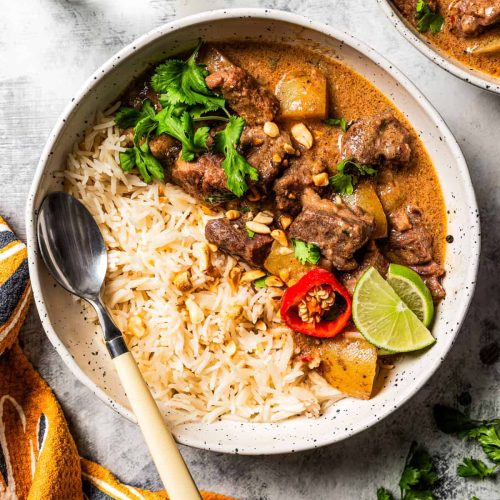
Massaman Curry
Ingredients
Curry Paste Ingredients
- 1 teaspoon ground cumin
- 0.75 teaspoon ground coriander
- 2 teaspoons ground ginger
- 0.75 teaspoon white pepper
- 0.25 teaspoon cardamom
- 0.25 teaspoon cloves
- 0.5 teaspoon cinnamon
- 1 pinch salt
- 3 Fresno chilies Fresno chilies seeded and chopped
- 1.5 tablespoons lemongrass paste
- 4 cloves garlic
- 0.5 medium red onion diced
- 7 stems cilantro just the stems
- 0.5 tablespoon miso paste
- 1 teaspoon brown sugar
- 1 tablespoon fresh lime juice
- as needed water for blending
Beef and Curry Base
- 3 pounds cubed beef chuck
- 3 tablespoons cornstarch
- 2 teaspoons salt
- 1 teaspoon ground black pepper
- 3 tablespoons vegetable oil
- 14 ounces canned full fat coconut milk
- 2 cups beef broth
Final Additions and Garnish
- 1 medium yellow onion thinly sliced
- 1.5 pounds baby gold potatoes halved
- to taste Roasted peanuts and chopped fresh cilantro for garnish
Instructions
Preparation Steps
- Blend. Add the cumin, coriander, ginger, pepper, cardamom, cloves, cinnamon, salt, chilis, lemongrass paste, garlic, onion, cilantro, miso paste, brown sugar, and lime juice to a blender. Pulse until a paste forms. If the paste isn’t coming together, add water, one tablespoon at a time, as needed.
- Season the beef. In a medium-sized mixing bowl, toss together the beef, cornstarch, salt, and pepper.
- Brown the beef. In a large saucepan, heat the oil over medium-high heat. Add the beef and saute until nicely caramelized on all sides.
- Make it saucy. Stir in the coconut milk and the curry paste followed by the beef broth. Stir until well combined.
- Simmer. Turn the heat to low, stir in the onion, and cover the saucepan. Simmer for 2 hours.
- Add the potatoes. Stir in the potatoes, cover the pan again, and cook for 25 minutes or until the potatoes are fork-tender.
- Serve. Serve warm over steamed white rice garnished with peanuts and cilantro.