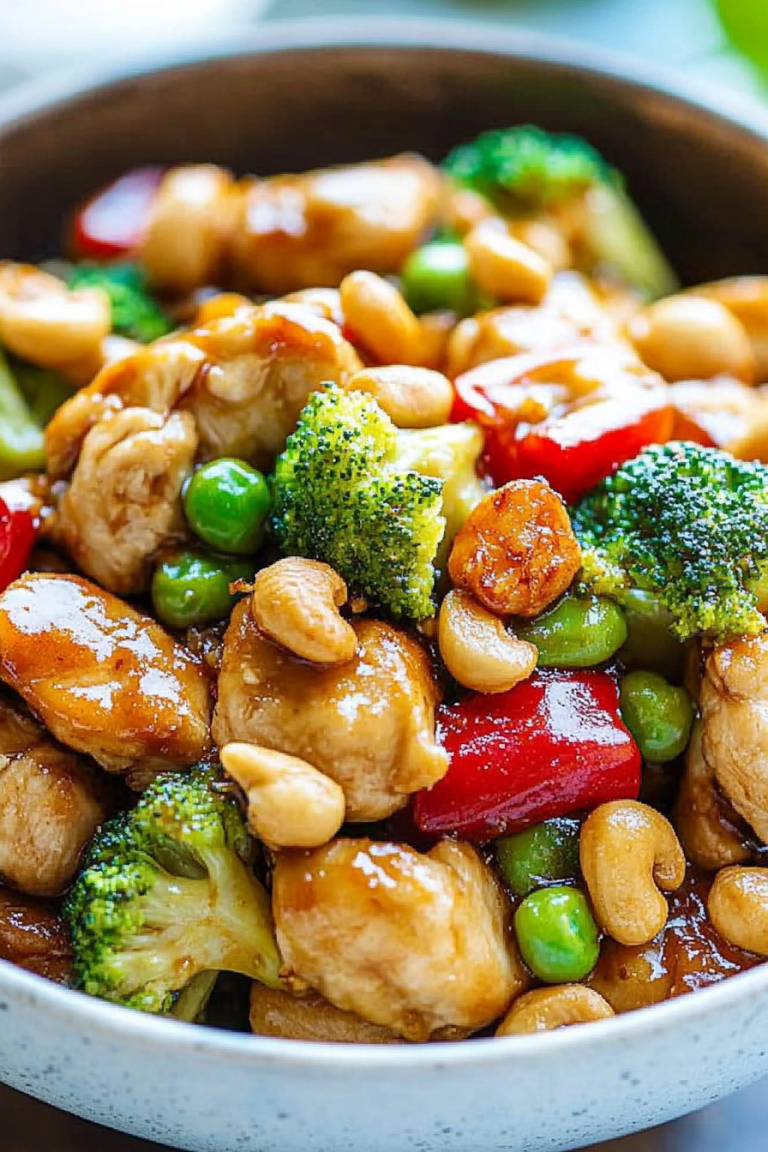
There’s something about the smell of sizzling garlic, toasted peanuts, and a spicy-sweet sauce that instantly takes me back to my mom’s kitchen. Growing up, my go-to comfort food was always a big plate of Kung Pao Chicken—fiery, nutty, with just the right balance of sweet and tangy. It’s one of those dishes that feels fancy enough for guests but comes together so quickly on a busy weeknight, making it a lifesaver when I don’t have hours to spend cooking. Honestly, it’s like a cousin to the classic General Tso’s chicken we all love, but with a nuttier twist and a bold, peppery personality. My kids actually ask for this more than pizza, which says a lot, right? If you’re craving something that punches way above its weight in flavor and is simple enough to whip up without stressing, this Kung Pao Chicken is my absolute favorite.
What is kung pao chicken?
Okay, so Kung Pao Chicken is a classic Sichuan dish known for its unique blend of spicy, sweet, and savory flavors. Think of it as stir-fried chicken tossed with crunchy peanuts and spicy dried chilis, all wrapped up in a tangy sauce that clings to every bite. The name “Kung Pao” actually comes from “Gongbao,” a title for a Qing dynasty official who supposedly loved this dish. It’s essentially a stir-fry featuring diced chicken, peanuts, and chilies, balanced with flavors like soy sauce, vinegar, and a touch of sugar for sweetness. It’s approachable enough for home cooks but bursting with that addictive, mouth-tingling heat characteristic of Sichuan peppercorns. If you’ve ever had Chinese takeout and loved the nutty, fiery chicken dishes, this is probably the recipe you’ll want to learn next.
Why you’ll love this recipe?
What I love most about this Kung Pao Chicken recipe is how the flavors come together to create something truly memorable without making me break a sweat in the kitchen. First off, the flavor combo is incredible: the spicy touch from dried chilis, the slight numbing sensation from Sichuan peppercorns, the crunch of perfectly toasted peanuts, and that sticky, glossy sauce that’s just sweet enough to balance the heat. The first time I made this for my husband, he couldn’t stop eating it—and neither could I!
It’s also crazy simple. I’ve made versions that take an hour, but this one’s a breeze and ready in under 30 minutes—perfect for those nights when you want something special but don’t want to live in the kitchen. My pantry probably always has the staples for it: soy sauce, rice vinegar, and, of course, peanuts. These ingredients keep the cost down, which is a huge win when feeding a hungry family of four.
Plus, Kung Pao Chicken is super versatile. You can swap chicken for tofu or shrimp, or throw in bell peppers and veggies to stretch the dish further. Sometimes I even double the peanuts because my kids love that extra crunch. It’s a dish that welcomes your own spin, whether you want to turn up the heat or soften it for the little ones. Honestly, if you liked spicy peanut noodles or General Tso’s chicken, this recipe hits all the notes but with a homecooked heart that really shines through.
How do I make kung pao chicken?
Quick Overview
At its core, making Kung Pao Chicken is all about crisping up your chicken pieces just right, toasting those peanuts till they’re beautifully fragrant, and then quickly stir-frying everything with a sauce that’s the perfect balance of savory, sweet, sour, and spicy. The great thing? You don’t need to be a pro chef or have a special wok—the process is straightforward and quick. The secret lies in prepping your sauce beforehand, managing the heat levels with dried chilies and peppercorns, and knowing when to toss everything together for that signature glossy finish. Trust me, once you nail the timing, you’ll make this dish again and again.
Ingredients
For the Chicken:
- 1 lb boneless, skinless chicken breasts or thighs, diced into bite-size chunks (thighs give extra juiciness!)
- 1 tablespoon soy sauce (for marinating)
- 1 teaspoon cornstarch (helps the chicken get that nice sear)
- 1 tablespoon vegetable or peanut oil (for cooking)
For the Sauce:
- 2 tablespoons soy sauce (go for low sodium to balance saltiness)
- 1 tablespoon dark soy sauce (for color and depth)
- 1 tablespoon rice vinegar (adds bright acidity)
- 1 tablespoon hoisin sauce (for mild sweetness and umami)
- 1 tablespoon sugar (or honey, if you prefer)
- 1 teaspoon sesame oil (optional but heavenly)
- 1/4 cup water or chicken broth (to loosen the sauce)
- 1 teaspoon cornstarch (to thicken)
For the Stir-fry:
- 8-10 dried red chilies (adjust based on your heat tolerance—don’t worry, they’re mostly for flavor)
- 1 teaspoon Sichuan peppercorns (ground or whole, for that iconic numbing tingle)
- 3 cloves garlic, minced
- 1-inch piece fresh ginger, minced
- 1/2 cup roasted peanuts (unsalted or lightly salted, for crunch)
- 2 scallions, chopped (for freshness and a green pop)
Step-by-Step Instructions
Step 1: Preheat & Prep Pan
I use a heavy skillet or wok and heat it up on medium-high until it’s almost smoking—that’s the best way to get the chicken to sear beautifully without steaming. If your pan isn’t hot enough, the chicken will just stew, and you want a nice golden finish. While the pan heats, make sure your chicken is patted dry—it helps with browning.
Step 2: Mix Dry Ingredients
For this recipe, dry mixing mostly means tossing your diced chicken with soy sauce and cornstarch until every piece is lightly coated. This creates that lovely thin crust formation when cooked. I learned the hard way that skipping this step can leave you with soggy chicken—so don’t skip it!
Step 3: Mix Wet Ingredients
Whisk together all the sauce ingredients in a small bowl before you start cooking. Seeing everything come together—the dark soy’s depth, the vinegar’s tang—is like tasting the future sauce, so trust me on mixing this early. This step saves you from scrambling during cooking to balance flavors.
Step 4: Cook Chicken
Add the oil to your hot pan, then carefully lay in the chicken in a single layer. Don’t overcrowd it. Let it cook untouched for a couple of minutes, so it forms that delicious crust, then stir and cook until just golden and cooked through. Overcooked chicken here equals rubbery chicken, so keep an eye on it.
Step 5: Prepare Aromatics & Spice
Push the chicken to one side of the pan, add more oil if needed, then toss in garlic, ginger, dried chilies, and Sichuan peppercorns. Stir-fry these gently until fragrant—it fills your kitchen with this comforting, slightly spicy aroma you’ll love. Just be careful not to burn the garlic.
Step 6: Combine & Add Peanuts
Return the chicken to the center and pour in the sauce mixture. Stir constantly; the sauce will thicken quickly thanks to the cornstarch. Right when the sauce is glossy and coats the chicken, toss in the peanuts and scallions. The peanuts keep their crunch but get some of that sauce flavor, which is irresistible.
Step 7: Final Taste & Serve
Give the whole thing a taste and add a pinch more sugar, soy, or vinegar if you want to tweak the balance. I usually like mine just a bit sweeter than traditional, but you do you. Serve hot over jasmine rice or fried rice for that restaurant finish. I love sprinkling extra chopped scallions on top—it just brightens everything.
What to Serve It With
For Dinner: This Kung Pao Chicken shines served with fluffy, steamed jasmine rice or golden fried rice if you’re feeling adventurous. My go-to side is simple stir-fried bok choy or garlic green beans—both add a fresh crunch to complement the saucy chicken.
For a Casual Weeknight: Pair it with quick steamed broccoli or snap peas for a speedy, colorful plate. A cold cucumber salad with rice vinegar dressing on the side cools down the heat and adds a refreshing bite, which is my husband’s favorite combo.
For a Crowd: Make extra fried rice and offer some crispy spring rolls or dumplings to round out the meal. Add a pitcher of jasmine tea or even a cold beer to keep things relaxed and easy-going. This combo has become a go-to when friends come over for spicy food night!
For a Cozy Snack: Leftover Kung Pao Chicken tossed into a wrap or over crispy lettuce leaves makes a quick, tasty snack my kids adore after school. It’s like eating a spicy peanut salad that feels indulgent but sneaks in some protein and greens.
Top Tips for Perfecting Your Kung Pao Chicken
Chicken Prep: Make sure to dry your chicken before tossing it in the soy sauce and cornstarch. This little step helps get that restaurant-quality sear instead of boiled chicken bits. Also, using thighs keeps the chicken juicy, but breasts work fine if you keep a close eye on the cooking time.
Stir-Fry Speed: Keep your heat high but not scorching. The aromatics like garlic, ginger, and chilies can burn quickly, which can add bitterness, so toss them in last and stir constantly.
Dried Chili Tips: The red chilies add smoky heat without overwhelming the dish. If you want milder flavor, use fewer chilies but keep the Sichuan peppercorns—they provide a buzzy numbness and complex flavor that really makes the dish special.
Peanut Perfection: Toast your peanuts lightly in a dry pan before adding to bring out their flavor. If you want to mix it up, try cashews or almonds for a twist, but peanuts are classic for a reason—they give this dish that perfect crunch and taste I’m hooked on.
Sauce Adjustments: The balance between sweet, sour, salty, and spicy is personal. I usually add a splash more vinegar for brightness and a pinch more sugar for softness, depending on how spicy the chilies are. Taste as you go!
Serving Suggestions: Leftover sauce thickens as it cools—just heat gently with a splash of broth or water to loosen it if needed. And if you want to keep extra sauce on the side for dipping, that’s my secret little indulgence.
Storing and Reheating Tips
Room Temperature: If you plan to eat within a couple of hours, cover the dish loosely with foil or a clean kitchen towel to keep the chicken moist and the sauce glossy. It’s perfect for a family dinner where everyone’s grazing at their own pace.
Refrigerator Storage: Kung Pao Chicken stores well for up to 3 days in an airtight container. When reheating, I find gently warming on the stovetop with a splash of water or broth keeps the chicken tender and the sauce silky, rather than drying out in the microwave.
Freezer Instructions: You can freeze leftover Kung Pao Chicken, but the peanuts might soften a bit. Pack it in a freezer-safe container and eat within 2 months. Thaw overnight in the fridge and reheat gently to bring back most of the fresh-cooked charm.
Glaze Timing Advice: Since the sauce is integral to the dish, I don’t add any glaze separately here like you might with some Asian dishes. If you want to refresh a leftover plate, toss with a drizzle of toasted sesame oil or a sprinkle of fresh scallions before serving.
Frequently Asked Questions
Final Thoughts
This Kung Pao Chicken recipe isn’t just a meal—it’s a little celebration of flavors that feels homemade and just right every time. The balance of spicy and sweet combined with the crunch of peanuts and the zing from Sichuan peppercorns keeps everyone at my table coming back for more. I’ve made this endless times, tweaking it here and there, but the core of it remains a family favorite that feels both comforting and a bit adventurous. If you’re the kind of person who loves bold flavors without fuss, this one’s going to be a keeper in your recipe collection, too. Don’t forget to leave a comment telling me how yours turned out or any spins you put on it—I’d love to hear! Happy cooking!
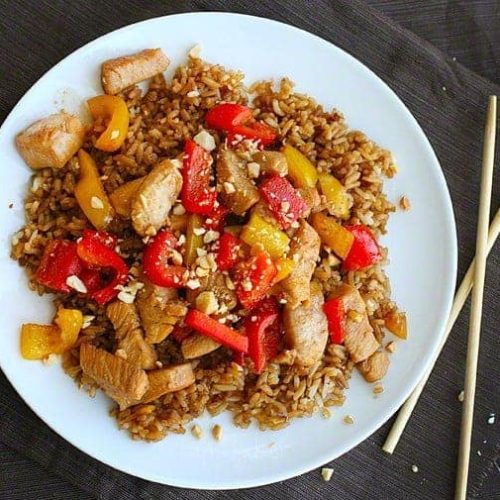
Kung Pao Chicken
Ingredients
Main Ingredients
- 10 ounce boneless skinless chicken breasts cut into bite-sized portions
- 1 tablespoon Chinese black vinegar or non-aged balsamic vinegar
- 2 tablespoons chicken stock or fat free vegetable stock
- 0.5 unit yellow bell pepper cut into 1-inch dice
- 0.5 unit red bell pepper cut into 1-inch dice
- 2 cloves garlic finely minced
- 2 teaspoons cooking oil
- 0.5 teaspoon cornstarch
- 2 teaspoons low-sodium soy sauce
- 0.33 cup unsalted roasted peanuts chopped
Instructions
Preparation Steps
- In a bowl, combine chicken with 1 teaspoon of soy sauce and cornstarch. Marinate for 10 minutes.
- Heat wok or large sauté pan over high heat. When hot, swirl in the oil and add the chicken.
- Spread the chicken out over all the surface of the pan. Sear on both sides until lightly brown, but not cooked all the way through, about 4 minutes.
- Add garlic and bell peppers. Stir until fragrant. Add the remaining 1 teaspoon of soy sauce, the stock, and the vinegar. Bring to a simmer and turn heat to medium-low. Cook for 2 minutes, or until chicken is cooked through.
- Top with chopped peanuts and serve. (I served mine over fried rice.)
- *Jaden's original recipe calls for dried red chilies and no yellow pepper.