There’s nothing quite like waking up to the smell of baked cinnamon-spiced bread, the kitchen warm and inviting, the promise of a delicious breakfast just moments away. I still remember the first time I made baked French toast for my family—my kids all crowded into the kitchen, eyes wide with excitement while the golden crust smelled like heaven. It’s like a hug on a plate, and honestly, when I’m short on time but want to serve something comforting, this is my go-to. Unlike regular French toast that demands standing at the stove flipping each slice, this version lets the oven do the work while I sip my coffee. Plus, it’s even better because it’s baked, custardy, and you can get creative with fillings or toppings. If you’ve ever had the classic skillet French toast, just wait until you try this baked French toast—it’s a game changer for weekends or busy mornings when you want to impress with minimal effort.
What is baked French toast?
So, baked French toast is essentially a casserole of bread soaked in a rich custard made from eggs, milk, sugar, and spices, then baked until the top is golden and crisp and the inside is soft and custardy. Think of it as a big, warm hug of breakfast baked all together instead of frying each slice separately. The name “French toast” comes from the idea of soaking stale bread in an egg mixture to make it delicious and soft again—it’s been around for ages, but baking it all together modernizes the process and brings out this incredible texture that’s part pudding, part breakfast classic. It’s easy, forgiving, and just feels a little extra special. Plus, you can add layers or swirl in flavors to keep it fun and fresh every time you make it.
Why you’ll love this recipe?
What I love most about this baked French toast is how it manages to feel both indulgent and cozy, but without the fuss of flipping slices on a pan or stressing over timing. The flavor? It’s like cinnamon and vanilla danced together and brought their best friends maple syrup and a touch of nutmeg to the party—warm, fragrant, and totally irresistible. It’s the sort of breakfast you don’t just eat but savor, with every bite melting in your mouth.
On top of that, it’s surprisingly simple. You mix a few basic ingredients, layer them in a pan, and let the oven do the magic while you get on with your morning. I promise, no complicated maneuvers or specialty equipment needed.
Budget-wise, you’re usually working with pantry staples—eggs, milk, bread, and a handful of spices. And bread? You can even use day-old loaves or whatever’s on hand, which makes it a brilliant way to rescue bread that’s a little past its prime without wasting food.
And the versatility… oh, it’s endless! Add berries, swirl in cream cheese or Nutella, sprinkle nuts on top, or swap the milk for almond or oat milk for a twist. I’ve made a version with pumpkin puree for fall that disappeared in minutes, and my kids actually ask for seconds—something I never take for granted. If you’ve toyed with skillet French toast, consider this the baked French toast upgrade you never knew you needed.
How do you bake French toast?
Quick Overview
Making baked French toast is straightforward: you soak your favorite bread in a flavorful custard, layer it in a baking dish, and bake it until it’s puffed, golden, and irresistibly soft inside. The best part? You can prepare it the night before for a stress-free morning or whip it up fresh in under an hour. It’s a great solution when you want a crowd-pleaser without the rush or standing over the stove flipping pancakes or toast. Plus, the baking method gives an even custardy texture that skillet French toast can’t quite match.
Ingredients
For the Main Batter:
- 6 large eggs – I always use farm-fresh when possible; they make a surprisingly big flavor difference
- 2 cups whole milk – I tested this with almond milk and it actually made it even creamier, so feel free to swap
- 1/2 cup heavy cream – optional but it makes the custard lush and silky
- 1/3 cup granulated sugar – you can reduce for less sweet
- 1 tbsp pure vanilla extract – nothing beats real vanilla
- 1 tsp ground cinnamon – the heart of the flavor here
- 1/4 tsp ground nutmeg – adds a warm, cozy undertone
- A pinch of salt – balances all the sweetness and spices
For the Filling:
- 1 cup cream cheese, softened – for luscious swirls, optional
- 1/3 cup brown sugar – to sweeten the filling
- 1 tsp vanilla extract – to complement the batter
- Fresh berries or sliced bananas – optional for a fruity touch
- Chocolate chips or chopped nuts – to jazz it up for special occasions
For the Glaze:
- 1/2 cup powdered sugar – for a light dusting glaze
- 2-3 tbsp milk or orange juice – to adjust consistency
- 1/2 tsp vanilla or almond extract – a little extra oomph
- Optional: a drizzle of maple syrup or honey on serving
Step-by-Step Instructions
Step 1: Preheat & Prep Pan
Preheat your oven to 350°F (175°C). Generously grease a 9×13 inch baking dish with butter or non-stick spray. I like to lightly butter the dish because it adds a subtle richness to the edges where the custard crisps up. While the oven warms, you can get your batter ready. A trick I learned is that if you let the pan warm up a bit, it helps the crust develop a nicer texture.
Step 2: Mix Dry Ingredients
In a medium bowl, whisk together the sugar, cinnamon, nutmeg, and salt. Mixing these first ensures the spices are evenly distributed through your custard rather than clumping in unexpected spots. Take a moment to breathe in that cinnamon scent—it’s the cozy inhalation to kick off the whole experience.
Step 3: Mix Wet Ingredients
In a separate large bowl, whisk the eggs until smooth, then add the milk, cream, and vanilla extract. Whisk again until everything is combined well. You want the mixture to be smooth and slightly frothy. At this stage, if you used chilled milk or cream, give it a brief whisk to ensure it’s nicely blended with the eggs.
Step 4: Combine
Now pour the dry ingredients into the wet and whisk just until blended. Err on the side of under-mixing here—you just want a uniform custard, not a whipped batter. Overmixing can make the texture too dense or tough. I often remind myself that this is a custard, not cake batter, so gentle mixing is the way to go.
Step 5: Prepare Filling
For the cream cheese swirl, combine cream cheese, brown sugar, and vanilla in a small bowl until smooth and creamy. If you want to get fancy, add some lemon zest for brightness. You can keep it simple or mix in berries for a fresh surprise in every bite. The contrast of creamy, tangy filling against sweet bread is one of my family’s favorite things.
Step 6: Layer & Swirl
Cut your favorite bread (I usually go for thick slices of brioche or challah) into cubes or triangles. Layer half the bread evenly in the pan, then dollop spoonfuls of the cream cheese mixture over it. Add the rest of the bread on top, then pour the custard all over, pressing lightly with a spatula to make sure every piece soaks up the custard. For the swirl effect, use a knife or skewer to gently swirl the cream cheese filling through the top layer for that beautiful marbled look that also tastes incredible.
Step 7: Bake
Bake uncovered for 40-50 minutes or until the custard is set and the top is golden brown. The edges should be slightly crisp while the inside stays soft and pudding-like. I test doneness by inserting a knife in the center—if it comes out clean or mostly clean, you’re good to go. If you find the top browning too fast, lightly tent with foil halfway through.
Step 8: Cool & Glaze
Let the baked French toast rest for 10-15 minutes—it gives it a chance to firm up for easier slicing and lets the flavors settle. While it cools, whisk together powdered sugar, milk (or orange juice for a citrus twist), and vanilla or almond extract to get a drizzle-ready glaze. It should be smooth but not too runny. Drizzle it over the slices just before serving, or set it on the side so everyone can add as much as they like.
Step 9: Slice & Serve
Use a sharp serrated knife to cut the baked French toast into squares or wedges. Serve warm, with an extra drizzle of maple syrup, fresh fruit, or a dusting of powdered sugar. The smell alone will draw everyone to the table. I like to pair it with a steaming cup of coffee or spiced chai. My kids always ask for seconds, and for me, seeing their happy plates is the best part.
What to Serve It With
For Breakfast: Pair your baked French toast with a robust cup of coffee or a frothy latte. Fresh fruit like sliced strawberries or orange wedges add a bright contrast, and a dollop of Greek yogurt on the side can balance the sweetness beautifully.
For Brunch: Serve with crispy bacon or sausage for a savory balance, add a sparkling mimosa or freshly squeezed juice, and dress it up with fresh mint or edible flowers. Elegant plating with small bowls of jam or compote can impress guests with little effort.
As Dessert: Warmed up with a scoop of vanilla ice cream or whipped cream, dusted with cinnamon or cocoa powder, and drizzled with warm chocolate sauce or caramel—this baked French toast turns into a stunning after-dinner treat.
For Cozy Snacks: Perfect on a chilly afternoon with a drizzle of honey and a cup of hot tea, or as a late-night sweet bite when you’re craving something soft, warm, and comforting without the hassle of baking an entire cake.
One of our family traditions is enjoying this on lazy Sundays, with laughter and the kind of slow mornings that let you savor delicious memories. Every time I make it, it feels like a little celebration of cozy moments that are simple but so special.
Top Tips for Perfecting Your Baked French Toast
Bread Choice: Use thick, sturdy bread like brioche, challah, or even a good-quality day-old white bread. Fresh bread can get too soggy, but day-old bread softens up perfectly while keeping structure.
Soak Time: Don’t rush the soaking. Let the bread soak in the custard mixture for at least 15 minutes before baking. If you have time, soaking overnight in the fridge makes it even creamier and more flavorful.
Mixing Advice: Always mix eggs and milk before folding in sugar and spices to prevent clumps. Don’t overbeat the custard; you want it smooth but not frothy. Overmixing can create a dense texture rather than custardy softness.
Swirl Customization: Swirling the cream cheese filling is a game changer. Use a knife or skewer to lightly pull the filling through the top layer of bread cubes—avoid too much stirring or you’ll lose the beautiful marbled look.
Ingredient Swaps: Tried almond or oat milk instead of dairy and loved the flavor twist. If avoiding sugar, maple syrup or honey works but add just enough to keep the custard balanced. For a dairy-free version, swap cream with coconut milk but expect a subtle coconut flavor.
Baking Tips: Oven temperatures vary, so start checking around 35–40 minutes. If the top browns too fast, cover with foil but don’t forget to remove it for the last 10 minutes so it crisps nicely. Bake in the middle rack for even cooking.
Glaze Variations: Try mixing powdered sugar with fresh lemon juice or orange juice for a tangy breakfast glaze. For a richer finish, blend powdered sugar with cream cheese and a vanilla splash for a frosting-like drizzle.
I learned through trial and error that rushing the soak or rushing the bake leads to soggy or dry textures. Patience really pays off here, and once I got the timing right, it’s been a reliable crowd-pleaser every time.
Storing and Reheating Tips
Room Temperature: If you plan to eat within a few hours, cover the baked French toast loosely with foil or a clean kitchen towel to keep it from drying out. It’s best eaten fresh, but it holds up well for up to 6 hours this way.
Refrigerator Storage: Store leftovers in an airtight container or covered with plastic wrap. It will keep well for 3-4 days. To reheat, I prefer popping slices into a toaster oven or regular oven at 325°F (160°C) for 10-15 minutes to bring back that crisp edge and warm custard interior.
Freezer Instructions: Wrap individual slices tightly in plastic wrap and then place in a freezer-safe zip bag. Frozen baked French toast lasts up to 2 months. Thaw in the fridge overnight before reheating gently in the oven to avoid sogginess.
Glaze Timing Advice: I recommend adding the glaze just before serving, especially if storing leftovers. If glued on too soon, it can soak into the toast and become too runny or sticky. Keep the glaze separate and drizzle as you reheat for that fresh sweet shine.
Frequently Asked Questions
Final Thoughts
If you’re looking for a breakfast that warms hearts as much as bellies, this baked French toast recipe really does it. I’ve made this countless times, and it never fails to become the highlight of the morning—soft custardy bread, a gentle cinnamon warmth, and those sweet swirls of cream cheese or blueberries that make every bite feel like a little celebration. It’s the kind of dish that turns a rushed morning into a moment to savor, a family gathering into a favorite tradition. If you find joy in folding cozy comfort food into your routine, definitely give this one a try—and don’t forget to tell me how yours turned out! Feel free to share your own twist or questions in the comments below. Happy baking!
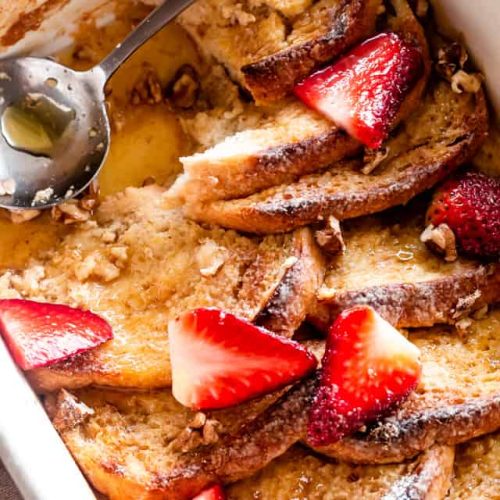
Baked French Toast
Ingredients
Main Ingredients
- 8 ounces cream cheese softened
- 4 large eggs
- 1.25 cups whole milk
- 0.25 cup maple syrup
- 1 teaspoon vanilla extract
- 0.5 teaspoon ground cinnamon
- 1 teaspoon orange zest
- 1 loaf stale bread like a large French baguette, sliced (about 14 slices)
- powdered sugar for sprinkling
- sliced strawberries for garnish (optional)
- chopped nuts for garnish (optional)
- maple syrup for serving (optional)
Instructions
Preparation Steps
- Butter or lightly grease a 9x13 baking dish. Arrange the bread slices in the baking dish and set aside.
- Cream the softened cream cheese in a mixing bowl with an electric mixer. Add the eggs and mix until combined. Stir in milk, maple syrup, vanilla extract, ground cinnamon, and orange zest until fully incorporated.
- Pour the cream cheese custard mixture evenly over the bread slices in the baking dish.
- Cover the baking dish and refrigerate overnight. If making the same day, allow to stand for 20 to 30 minutes before baking.
- Preheat the oven to 350˚F (175˚C). Remove the baking dish from the refrigerator and let it sit at room temperature for 15 minutes.
- Bake uncovered for 35 to 40 minutes, until the custard is set and the top is golden brown.
- Remove from oven. Sprinkle powdered sugar on top, garnish with sliced strawberries and chopped nuts, and serve with maple syrup if desired.