Okay, confession time: I have a weakness for anything that involves melted cheese and spicy, smoky flavors, especially when it’s hiding in a comforting bowl of pasta. For years, my family adored my classic chicken fajitas, but lately, the request has shifted. They wanted something heartier, something that felt a little more substantial for a chilly weeknight. That’s when this absolute gem was born: What is steak fajita pasta?. Seriously, the first time I made this, my husband looked up from his bowl with genuine shock and asked if I’d ordered takeout and was trying to pass it off as homemade. It’s that good. It captures all the zing of your favorite sizzling skillet steak fajitas—the charred peppers, the smoky seasoning, that bright lime kick—but blankets it all in the creamiest, most luxurious sauce you can imagine. If you’re tired of the same old spaghetti and meatballs routine and want a flavor bomb that screams weeknight win, stick with me. This recipe is going to change your dinner game.
What Is Steak Fajita Pasta?
So, what exactly is this glorious marriage of Tex-Mex and Italian comfort food? Think of it as the flavor profile of authentic steak fajitas—tender strips of marinated flank steak, sweet onions, and vibrant bell peppers—but instead of serving them on a stack of warm tortillas, we toss everything with perfectly cooked pasta and a ridiculously decadent cream sauce. It’s essentially a creamy, cheesy Alfredo situation that has been thoroughly seasoned with cumin, chili powder, and paprika. It’s not trying to be a traditional Mexican dish; it’s definitely an American fusion creation, and I’m not mad about it! It’s quick enough that you can whip it up after work, but it feels incredibly gourmet. The magic is in layering those smoky fajita spices into the cream base. It elevates the whole thing from simple pasta night to something truly memorable. My favorite part? Watching those colorful peppers and onions cling to the fettuccine!
Why you’
I’ve made pasta dishes for every holiday and every lazy Sunday imaginable, but this steak fajita pasta has earned a permanent spot in my rotation, and I know it will for you too. Let’s talk flavor first. If you love that slight char and deep smoky note you get from grilled fajitas, you get that same intensity here, thanks to how we cook the steak and peppers. We hit them with high heat, just like we would on the grill, and that creates those caramelized edges that add so much depth. It’s complex without being complicated.
Simplicity is the other massive win here. You use one pan for the meat and veggies, and one pot for the pasta. The sauce comes together right in that skillet after the steak comes out—minimal cleanup, maximum flavor payoff. Seriously, you’re looking at under 40 minutes total, which is why this is my designated “I forgot to plan dinner” lifeline. Economically, it’s fantastic, too. Flank steak goes a long way when paired with pasta, stretching that protein further than if you were just serving pure steak and sides. Plus, the core ingredients—peppers, onions, cream cheese (trust me on the cream cheese)—are usually budget-friendly staples.
What I love most about this is its versatility. I’ve tested this recipe endlessly. If you’re avoiding dairy, I’ve even managed a decent version using oat milk and cashew cream, though it loses a *tiny* bit of that signature richness. If you want it spicier, toss in some minced jalapeño with the onions. It’s incredibly adaptable. Compared to my cheesy taco pasta, this version feels a little more grown-up because of the depth of the fajita seasoning. It’s sophisticated comfort food. It’s the kind of dish that pleases the picky eater because it’s pasta, but satisfies the foodie in me because of the layers of savory spice. It truly is a crowd-pleaser, whether I’m serving it to my family or bringing it to a potluck.
How to Make Steak Fajita Pasta
Quick Overview
The process is deceptively easy, which is why I’m so enthusiastic about sharing it. We start by quickly searing off heavily seasoned strips of flank steak—we want color fast, so don’t overcrowd the pan! Once the steak is out, we toss in the peppers and onions to capture all those delicious browned bits from the meat. Then comes the fun part: building the sauce right in that same pan. We melt down cream cheese and butter, add heavy cream and broth, then layer in that perfect fajita spice blend. We cook the pasta separately until it’s just shy of al dente, then toss it all together so the noodles soak up every last drop of that incredible sauce. A final squeeze of fresh lime juice brightens everything up, and dinner is done. It’s faster than delivery, and the flavor is unmatched.
Ingredients
For the Main Batter (The Steak & Veggies):
1.5 lbs Flank Steak, cut into thin, bite-sized strips (make sure it’s trimmed of any major silver skin)
1 large Yellow Onion, sliced thinly
2 Bell Peppers (I use one red, one green for color!), sliced thinly
2 Tablespoons Olive Oil, divided
Salt and freshly ground Black Pepper, to taste
For the Creamy Fajita Sauce & Pasta:
1 lb Fettuccine or Penne Pasta (I prefer fettuccine for better sauce cling)
4 Tablespoons Unsalted Butter
4 oz Cream Cheese, full fat is non-negotiable for the best texture, cubed
1 cup Chicken Broth (low sodium is best so you can control the salt)
1 cup Heavy Cream (don’t try to sub with milk unless you want a thinner sauce; this needs the fat to hold up)
1/2 cup reserved Pasta Water (this is liquid gold for emulsifying the sauce)
For the Fajita Seasoning Blend:
2 teaspoons Chili Powder (use a good quality one, it makes a difference!)
1 teaspoon Cumin (freshly ground if you have it, otherwise standard is fine)
1 teaspoon Smoked Paprika (this is essential for that smoky backbone)
1/2 teaspoon Garlic Powder
1/2 teaspoon Onion Powder
1/4 teaspoon Cayenne Pepper (adjust based on your heat tolerance)
1 Tablespoon Fresh Lime Juice (added right at the end)
Step-by-Step Instructions
Step 1: Preheat & Prep Pan
Get a large Dutch oven or a very large, heavy-bottomed skillet heating over medium-high heat. We want it hot enough to sear, not just sauté. While that’s heating, slice your steak, onions, and peppers. Season the steak generously with salt and pepper right before it hits the pan.
Step 2: Mix Dry Ingredients
In a small bowl, whisk together all the Fajita Seasoning Blend ingredients: chili powder, cumin, smoked paprika, garlic powder, onion powder, and cayenne. Make sure they are perfectly incorporated so you don’t get a mouthful of pure cumin later! Set this aside near your stovetop.
Step 3: Mix Wet Ingredients
The ‘wet’ components here are the cream, broth, and the amazing cream cheese. Have these ready to go near the stove, but don’t combine them yet. The key is having everything staged because the sauce builds quickly once the veggies soften.
Step 4: Combine
Add 1 tablespoon of olive oil to the hot skillet. Add half of the seasoned steak strips in a single layer—do not crowd them, or they will steam instead of sear! Cook for about 2 minutes per side until nicely browned. Remove the steak and set it aside in a clean bowl. Repeat with the remaining oil and steak. You want a good, dark crust on that meat.
Step 5: Prepare Filling (Veggies & Seasoning)
Add the onions and peppers to the same hot skillet (don’t wipe it out!). Sauté for about 5-7 minutes until they start to soften and get a little translucent, scraping up any browned bits from the steak. Sprinkle about two-thirds of your prepared fajita seasoning blend over the vegetables and cook for one minute until fragrant. Remove the vegetables and add them to the bowl with the steak.
Step 6: Layer & Swirl (The Sauce Build)
Lower the heat to medium-low. Add the butter to the empty skillet. Once melted, toss in the cubed cream cheese. Stir constantly until it’s smooth and melted into a thick paste—this is your texture base. Slowly whisk in the chicken broth until smooth. Then, drizzle in the heavy cream while whisking constantly. Let this gently simmer for about 2 minutes until it thickens slightly. Taste the sauce now and add any remaining fajita seasoning blend if you want more spice.
Step 7: Bake
Wait, bake? Nope! This is a stovetop wonder. While the sauce simmers, your pasta should be boiling according to package directions, but pull it out about 2 minutes *before* the suggested time (it will finish cooking in the sauce). Before draining, scoop out about 1 cup of the starchy pasta water. Drain the pasta.
Step 8: Cool & Glaze
Add the drained pasta directly into the skillet with the cream sauce. Toss to coat. If the sauce seems too thick, add the reserved pasta water, a splash at a time, until it’s luxuriously creamy—it should coat the back of a spoon beautifully. Now, fold the cooked steak and vegetables back into the pasta. Stir gently just to heat through (we don’t want to overcook the steak). Turn off the heat and stir in the fresh lime juice.
Step 9: Slice & Serve
Serve immediately in big, warm bowls. I usually top mine with a sprinkle of fresh cilantro and maybe some Cotija cheese if I have it, but honestly, it doesn’t need much else. The steam rising off that bowl carrying the scent of cumin and lime is just heavenly. Make sure everyone gets a good mix of steak, peppers, and creamy noodles!
What to Serve It With
This steak fajita pasta is so robust and flavorful that it genuinely stands up all on its own. It’s a one-bowl wonder, which is why I rely on it during busy weeks. However, if you’re serving it up for company or want to stretch the meal a bit further, I have a few tried-and-true pairings that elevate the experience.
For Breakfast: Okay, hear me out—leftover pasta is incredible cold, but I prefer it lightly reheated the next morning. I serve a small portion alongside my morning coffee, maybe with a fried egg cracked right on top. The runny yolk blends into the creamy sauce and it’s just pure savory bliss. It’s unexpected, but trust me, it’s the best hangover cure.
For Brunch: If I’m staging this for a larger weekend brunch, I keep the sides light and acidic to cut through the richness. A simple side salad dressed with a sharp vinaigrette—maybe a mix of arugula and radishes—is perfect. I also love serving it with warm, slightly charred corn tortillas on the side. Some people use them to scoop up extra sauce, others just enjoy the textural break.
As Dessert: Since this is such a savory dish, the dessert pairing should lean fresh. Skip heavy chocolate. My go-to is fresh pineapple slices grilled quickly with a dusting of cinnamon sugar, or maybe some lime sorbet for a palate cleanser. It mirrors the lime finish in the pasta perfectly.
For Cozy Snacks: When we just want a comforting bowl on a movie night, I skip the sides entirely. The only accompaniment needed is a cold Mexican lager or a big glass of iced tea with extra lemon. That simple saltiness balances the creamy spice of the steak fajita pasta perfectly. My kids always ask for a dollop of sour cream right on top when we serve it casually like this—it cools down the spice just enough for them.
Top Tips for Perfecting Your Steak Fajita Pasta
After making this more times than I care to admit (it’s my husband’s birthday request every year now), I’ve learned a few crucial things that take it from good to absolutely legendary. Pay attention to these details!
Zucchini Prep: Wait, zucchini? Oh, right, I mentioned I experimented! If you want to sneak in extra veggies, grating zucchini works surprisingly well because it blends into the sauce, but you MUST salt it first. Grate about one medium zucchini, toss it with a pinch of salt, let it sit for 15 minutes, and then squeeze every drop of water out using a clean kitchen towel. If you skip this, your sauce will be watery.
Mixing Advice: The biggest mistake people make with any cream sauce is overheating it once the dairy is added. Once the heavy cream and cream cheese are mixed, keep the heat on medium-low. If it starts boiling vigorously, the sauce can “break” and become grainy. We want a gentle simmer. If it gets too thick while you wait for the pasta, don’t panic; that’s why we reserved the pasta water—it contains starch that helps the sauce emulsify beautifully.
Swirl Customization: While this isn’t a marbled cake, the distribution of the color matters. When adding the spices to the veggies, only use two-thirds of your blend. Save the rest to stir directly into the cream base. This ensures you get pockets of intense spice flavor where the sauce is thickest, rather than just a uniform pale orange color throughout.
Ingredient Swaps: If you don’t have flank steak, skirt steak works beautifully and often has more natural marbling. If you absolutely cannot find cream cheese, you can try using an equal amount of Mascarpone, but you’ll need to add slightly more salt and perhaps a tiny squeeze more lime juice to compensate for the sweetness. Dairy substitutes are tricky here; they just don’t provide the same structure that the full-fat cream cheese offers.
Baking Tips: Since we aren’t baking, focus on oven positioning for the pasta. Cook your pasta in rapidly boiling water with plenty of salt—it should taste like the sea! Make sure you pull it two minutes early. If you cook it fully on the stove and then simmer it in the sauce for another three minutes, you’ll end up with mushy noodles, and nobody likes that. We want bite, baby!
Glaze Variations: I used “glaze” earlier, but really, it’s just the sauce. For an added flourish, some readers have fantastic results by stirring in a tablespoon of good quality queso fresco right at the very end, off the heat, for extra meltiness without thinning the sauce too much. I’ve also tested adding a tablespoon of heavy cream mixed with taco seasoning right before serving—it gives an extra punch of flavor right on the tongue.
Storing and Reheating Tips
Leftover steak fajita pasta is legitimately a treasure, but it requires a little care because cream sauces can be temperamental when refrigerated. I always try to make sure there’s plenty leftover because the flavor deepens overnight!
Room Temperature: Honestly, I wouldn’t leave this out for more than two hours. Because it has heavy cream and cream cheese, it’s best kept cool. If you have leftovers and are eating them within a few hours, store them in a shallow, airtight container on the counter, covered tightly. This is more of a holding pattern than true storage.
Refrigerator Storage: This is where it shines for leftovers. Transfer any remaining pasta to an airtight container—glass is my preference. Try not to pack it down too tightly. It will keep wonderfully for up to four days. You’ll notice the sauce thickens significantly upon chilling; this is normal! It becomes almost tacky.
Freezer Instructions: While it freezes okay, the texture of the sauce changes slightly upon thawing, sometimes becoming a little grainy. If you must freeze it, let the pasta cool completely before portioning it into freezer-safe zip-top bags, squeezing out all the air, and laying them flat. Freeze for up to three months. Thaw overnight in the fridge before reheating.
Glaze Timing Advice: Never add the lime juice if you plan on freezing or saving leftovers for more than a day. The acid can sometimes interact poorly with the dairy over long storage periods. Add the lime zest and juice fresh right before serving the leftovers. To reheat, always use the stovetop. Place the pasta in a skillet over medium-low heat, and slowly incorporate splashes of fresh chicken broth or whole milk until the sauce reaches your desired creaminess again. Low and slow is the mantra here; microwaving often causes the sauce to separate unevenly.
Frequently Asked Questions
Final Thoughts
I really hope you give this steak fajita pasta a try soon. Honestly, it’s the kind of meal that sticks in your memory long after the dish is cleaned up because the aroma alone is intoxicating while you’re cooking it. It’s the perfect blend of weeknight speed and weekend flavor indulgence. When I first made this fusion dish, I was worried it would be one of those novelty recipes that fades away, but nope—it’s become a staple. It requires just enough technique (namely, searing the steak properly and not overcooking the pasta) to feel like you’ve accomplished something impressive, yet it’s genuinely simple enough for even a hesitant cook.
If you love this flavor combination, you might also want to check out my recipe for Loaded Skillet Queso Dip, which uses a similar spice profile! But for now, focus on getting that steak perfectly caramelized and that sauce incredibly smooth. When you pull that pan off the heat and finish it with that bright pop of fresh lime, you’ll know exactly what I mean about pure culinary satisfaction. Please, please come back and let me know in the comments how it turned out! Did your family love it? Did you add extra spice? I’m always looking for new ways to tweak this already perfect bowl. Happy cooking!
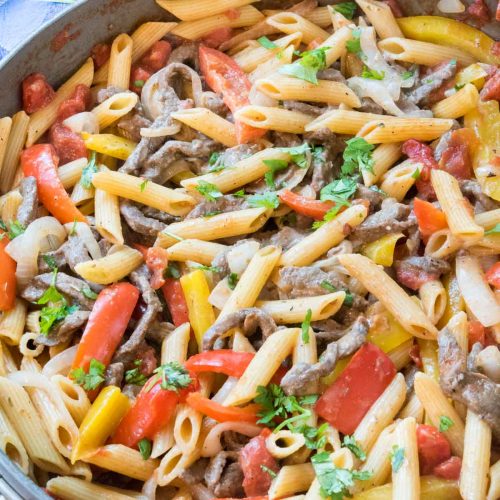
steak fajita pasta
Ingredients
Main Ingredients
- 1.5 tsp dried oregano
- 1.5 tsp ground cumin
- 1 tsp garlic powder
- 0.5 tsp chili powder
- 0.5 tsp paprika
- 0.25 tsp dried red pepper flakes adjust to heat preference
- 0.5 tsp ground black pepper
- 1 tsp kosher salt
- 1 lb beef stir fry meat or any thinly sliced cut
- 1 tbsp olive oil
- 1 medium yellow onion sliced
- 2 medium bell peppers any colors, sliced
- 2 cloves garlic finely chopped
- 15 oz diced tomatoes canned
- 2.5 cups beef or chicken stock can substitute water
- 10 oz dried pasta penne or similar
- 0.25 cup sour cream
Instructions
Preparation Steps
- In a small bowl, combine oregano, cumin, garlic powder, chili powder, paprika, red pepper flakes, black pepper, and salt. Rub the spice mix onto the beef to coat evenly.
- Heat olive oil in a large skillet over medium-high heat. Add the steak and brown on all sides, approximately 5 minutes. Remove steak from skillet and set aside.
- Add onion, bell peppers, and garlic to the skillet. Sauté until softened and lightly browned, about 5 minutes. Remove and combine with the cooked steak.
- Stir diced tomatoes, stock, and dried pasta into the skillet. Bring to a boil, stirring occasionally. Cook until pasta is tender but still has bite, about 8 to 12 minutes. Some sauce will remain in the pan.
- Return steak and peppers to the skillet. Stir in sour cream and cook over low heat until everything is hot and well combined. Serve immediately.