Okay, so, picture this: a chilly evening, maybe you’ve had one of *those* days where everything felt a little… much. You’re craving something deeply comforting, something that smells incredible as it cooks, and something that actually tastes even better than it smells. That’s exactly when my mind goes straight to this French onion pork. It’s not just dinner; it’s a whole experience. You know how some recipes just *feel* like a warm hug? This is it. It’s got that rich, savory depth of classic French onion soup, but transformed into this incredibly tender, succulent pork dish. Honestly, if you love French onion soup as much as I do, but want something a bit more substantial and, dare I say, elegant enough for company but easy enough for a Tuesday night, you are going to adore this. It’s become my go-to when I need a little culinary magic to make everything feel right again. It’s honestly one of the most requested dishes in our home, and it’s surprisingly simple to pull off!
What is French onion pork?
So, what exactly *is* French onion pork? Think of it as taking all the best parts of that iconic French onion soup – the sweet, caramelized onions, the rich broth, the gooey melted cheese – and infusing them into tender pieces of pork. It’s not a soup, and it’s not just plain pork; it’s this beautiful marriage of flavors and textures. The pork gets incredibly tender as it braises, soaking up all that savory onion goodness. We’re talking deep, complex flavors without any fussy steps. The name itself just evokes comfort, doesn’t it? It’s essentially a celebration of slow-cooked onions and perfectly cooked pork, creating a dish that’s both rustic and refined. It’s the kind of meal that makes your kitchen smell absolutely divine, and that aroma alone is worth its weight in gold. It’s simple, elegant, and utterly delicious.
Why you’ll love this recipe?
There are so many reasons I keep coming back to this French onion pork, and I have a feeling you’ll find your own favorites too. First and foremost, the FLAVOR is out of this world. We’re talking layers upon layers of savory, sweet, and umami goodness. The slow-cooked onions become almost jammy, and the pork just melts in your mouth. It’s like a gourmet meal without the gourmet effort, which is a huge win in my book! Speaking of effort, the SIMPLICITY of this dish is another major draw. While it tastes like it took hours of fussing, the actual hands-on time is pretty minimal. Most of the magic happens while it’s gently cooking away in the oven. And let’s talk COST-EFFICIENCY. Pork shoulder or loin is usually quite budget-friendly, and onions and broth are pantry staples. This means you can whip up a seriously impressive and satisfying meal without breaking the bank. Plus, it’s incredibly VERSATILE. I’ll get to some serving suggestions later, but it works with so many different sides, making it perfect for any occasion. Honestly, what I love most about this French onion pork is that it’s a crowd-pleaser that doesn’t demand all day in the kitchen. It’s my secret weapon for busy weeknights that still feel special, and it’s definitely a recipe that will earn you rave reviews. It’s a real lifesaver when you want something hearty and flavorful without the stress!
How do I make French onion pork?
Quick Overview
This French onion pork is all about building flavor through simple steps. We’ll start by searing the pork to lock in juices, then gently caramelize loads of onions until they’re sweet and tender. Everything then gets braised together in a savory, aromatic broth until the pork is fall-apart tender. Finally, a hint of cheese on top makes it pure bliss. It’s a straightforward process that yields incredibly rewarding results, perfect for any home cook looking for a delicious and comforting meal.
Ingredients
For the Pork:
2-3 pounds pork shoulder (also called pork butt) or pork loin, cut into 1.5-inch cubes. Pork shoulder will give you the most tender, shreddable results, while loin will be a bit firmer but still delicious. I usually opt for shoulder because I love the texture it gets after braising. If you can’t find it, loin is a good substitute though it might cook a little faster.
For the Onions: What is the meaning of the word “for the onions”?
4-5 large yellow onions, thinly sliced. Don’t be shy with the onions – they are the star of the show! I find yellow onions give the best sweetness and caramelization, but sweet onions like Vidalia also work beautifully. The key is to slice them thinly so they cook down evenly.
For the Braising Liquid:
2 cups beef broth. Good quality beef broth makes a big difference here. You can use low-sodium if you prefer to control the saltiness yourself.
1 cup dry white wine (like Sauvignon Blanc or Pinot Grigio) or chicken broth for a non-alcoholic option. The wine adds a lovely subtle acidity that balances the richness.
2 tablespoons Worcestershire sauce. This is non-negotiable for that classic savory depth!
1 tablespoon soy sauce. Another umami booster!
2 sprigs fresh thyme (or 1 teaspoon dried thyme). Thyme and onion are just a match made in heaven.
For Finishing:
1/2 cup grated Gruyère cheese or Swiss cheese. Gruyère is traditional for French onion soup and melts beautifully, giving that signature cheesy top. Swiss is a great, more accessible alternative.
Salt and freshly ground black pepper to taste. You’ll need these throughout the cooking process, so have them handy!
For Searing:
2 tablespoons Olive oil or butter. I often use a mix of both for the best flavor and browning.
Step-by-Step Instructions
Step 1: Preheat & Prep Pan
First things first, preheat your oven to 325°F (160°C). You want a nice, slow and steady heat for braising. Now, grab a large, oven-safe pot or Dutch oven. If you don’t have one, a heavy-bottomed pot with a tight-fitting lid will work just fine. We’re going to sear the pork directly in this pot, so make sure it’s big enough to hold everything comfortably. Getting it nice and hot is key for that delicious crust on the pork.
Step 2: Mix Dry Ingredients
While the pot is heating, let’s prep the pork. Pat your cubed pork dry with paper towels – this is crucial for getting a good sear. Season it generously all over with salt and freshly ground black pepper. Don’t be afraid to really season it well; this is the first layer of flavor. I always do this step in a bowl so I can ensure every single piece is coated evenly.
Step 3: Mix Wet Ingredients
Now, for the onions. Slice them thinly. I usually do this by cutting them in half through the root end, peeling them, and then slicing pole to pole. This helps them hold their shape a little better. Get your braising liquid ingredients measured out and ready to go. Having everything prepped and measured makes the actual cooking process so much smoother and less stressful. It’s one of those things I learned the hard way – scrambling for ingredients mid-cook is never fun!
Step 4: Combine
Add the olive oil (or butter, or both!) to your preheated Dutch oven over medium-high heat. Once it’s shimmering, add the seasoned pork cubes in batches. Don’t crowd the pot, or the pork will steam instead of sear. You want a beautiful golden-brown crust on all sides. Remove the seared pork to a plate and set aside. Now, add the sliced onions to the same pot. You might need to add a little more oil if the pot looks dry. Sauté the onions, stirring frequently, for about 20-30 minutes, or until they are deeply golden brown and caramelized. This step takes patience, but it’s where all that incredible sweetness comes from. You can scrape up any browned bits from the bottom of the pot as you go – that’s pure flavor!
Step 5: Prepare Filling
Once the onions are beautifully caramelized, pour in the white wine (or broth) and scrape up any browned bits from the bottom of the pot. Let it simmer for a minute or two to reduce slightly. Then, add the beef broth, Worcestershire sauce, soy sauce, and thyme sprigs. Stir everything together to combine.
Step 6: Layer & Swirl
Return the seared pork cubes (and any accumulated juices from the plate) to the pot with the onions and broth mixture. Nestle the pork into the liquid. It should mostly be submerged. If it’s not, you can add a little more broth or water. Bring the liquid to a gentle simmer on the stovetop.
Step 7: Bake
Cover the pot tightly with its lid and transfer it to your preheated oven. Let it braise for about 2 to 2.5 hours, or until the pork is fork-tender and easily shreds with a fork. The exact time will depend on your cut of pork and your oven, so check it periodically. I like to give it a stir about halfway through.
Step 8: Cool & Glaze
Once the pork is tender, carefully remove the pot from the oven. Remove the thyme sprigs. If the sauce looks a bit too thin for your liking, you can remove the pork to a plate, place the pot back on the stovetop over medium heat, and let the sauce simmer and reduce until it reaches your desired consistency. This usually takes about 10-15 minutes. Taste the sauce and adjust seasoning with salt and pepper if needed.
Step 9: Slice & Serve
Now for the grand finale! Sprinkle the grated Gruyère cheese evenly over the top of the pork and onions. You can either pop it back under the broiler for a minute or two until the cheese is bubbly and golden brown (watch it closely so it doesn’t burn!), or you can just let it melt into the hot sauce. Serve the French onion pork hot, directly from the pot. It’s wonderful spooned over mashed potatoes, noodles, or crusty bread to soak up all that delicious sauce.
What to Serve It With
This French onion pork is so hearty and flavorful that it practically begs for some comforting companions. For a classic BREAKFAST or BRUNCH, I love to serve it alongside some perfectly poached eggs. The runny yolk mixes beautifully with the savory pork and onion sauce, creating a decadent start to the day. A side of crispy hash browns or some warm, crusty bread for dipping is a must. If you’re serving this as a main course for DESSERT (or just a really indulgent dinner!), it’s absolutely divine over creamy mashed potatoes. The potatoes soak up all that rich sauce, and it’s pure comfort food heaven. Another favorite is serving it over egg noodles or even simple white rice. For a COZY SNACK, you can even pile it onto toasted baguette slices for an open-faced sandwich that feels like a gourmet treat. My family also loves it with roasted root vegetables – carrots, parsnips, and potatoes all caramelize beautifully alongside this dish. And honestly, sometimes, all it needs is a really good, crusty loaf of sourdough bread for dipping into that glorious sauce. It’s that good!
Top Tips for Perfecting Your French Onion Pork
I’ve made this French onion pork more times than I can count, and along the way, I’ve picked up a few tricks that I think really make a difference. For the ONIONS, patience is key. Don’t rush the caramelization process! Low and slow is the way to go. If they start to burn, turn the heat down and add a tablespoon of water to help deglaze the pan. It’s better to take your time and get them deeply golden than to have pale, undercooked onions. When it comes to MIXING, make sure you’re not overworking the pork if you’re using pork loin. For pork shoulder, it’s more forgiving, but you still want to avoid a mushy texture before braising. The key is to get a good sear on all sides to lock in moisture and add flavor. When it comes to the braising liquid, I’ve found that using a combination of beef broth and white wine gives the most balanced flavor. If you prefer not to use wine, a good quality chicken broth works well, or even just extra beef broth. Some people like to add a touch of balsamic vinegar at the end for an extra layer of tang, which is a nice VARIATION to try. For BAKING, ensure your lid is on tight to trap all that steam and moisture. If you notice the liquid reducing too much during the braising time, you can always add a little more broth. As for the CHEESE, I’m a huge fan of Gruyère for its nutty flavor and fantastic meltability, but Swiss or even a good sharp white cheddar can be delicious alternatives. Don’t skimp on the cheese; it’s the crown jewel! My personal “lesson learned” was realizing that the quality of your beef broth really impacts the final flavor. So, if you can, use a good homemade broth or a high-quality store-bought one. Trust me on this one, it’s worth it!
Storing and Reheating Tips
This French onion pork is fantastic as leftovers, and I often find it tastes even better the next day! For ROOM TEMPERATURE storage, it’s best to let it cool down for about an hour after cooking before covering it. It should be fine at room temperature for up to two hours. Once cooled, I like to transfer it to an airtight container. For REFRIGERATOR STORAGE, it will keep beautifully for about 3 to 4 days. Make sure it’s in a sealed container. The flavors really meld together overnight, making it incredibly delicious. When it comes to FREEZER INSTRUCTIONS, this dish freezes wonderfully. Portion it into freezer-safe containers or heavy-duty freezer bags. It can be stored in the freezer for up to 3 months. When you’re ready to thaw, the best method is to transfer it from the freezer to the refrigerator overnight. For reheating, you have a few options. The easiest is to gently reheat it in a saucepan over low heat on the stovetop, stirring occasionally. You can also reheat it in a microwave-safe dish, covered, at 50% power until heated through. If the sauce seems a bit thick after reheating, you can stir in a tablespoon or two of beef broth or water to loosen it up. For the GLAMOUR of the cheesy topping, I recommend adding the cheese fresh after you’ve reheated the pork and sauce. Just sprinkle it over and pop it under the broiler for a minute or two until bubbly and golden. This way, you get that lovely fresh, melted cheese effect!
Frequently Asked Questions
Final Thoughts
There you have it – my go-to French onion pork recipe! It’s a dish that truly embodies comfort food for me. The way the pork becomes so incredibly tender, soaking up all those sweet, savory onion flavors, is just pure culinary magic. It’s a meal that makes you feel good from the inside out, and honestly, the aroma that fills your home while it’s cooking is half the pleasure. I hope you give this a try, and I can’t wait to hear how it turns out for you! If you’re someone who loves the deep, rich flavors of French onion soup but wants something a bit more substantial for a main course, this recipe is definitely for you. It’s proof that you don’t need fancy ingredients or complicated techniques to create something truly special and delicious. Happy cooking, and enjoy every comforting bite!
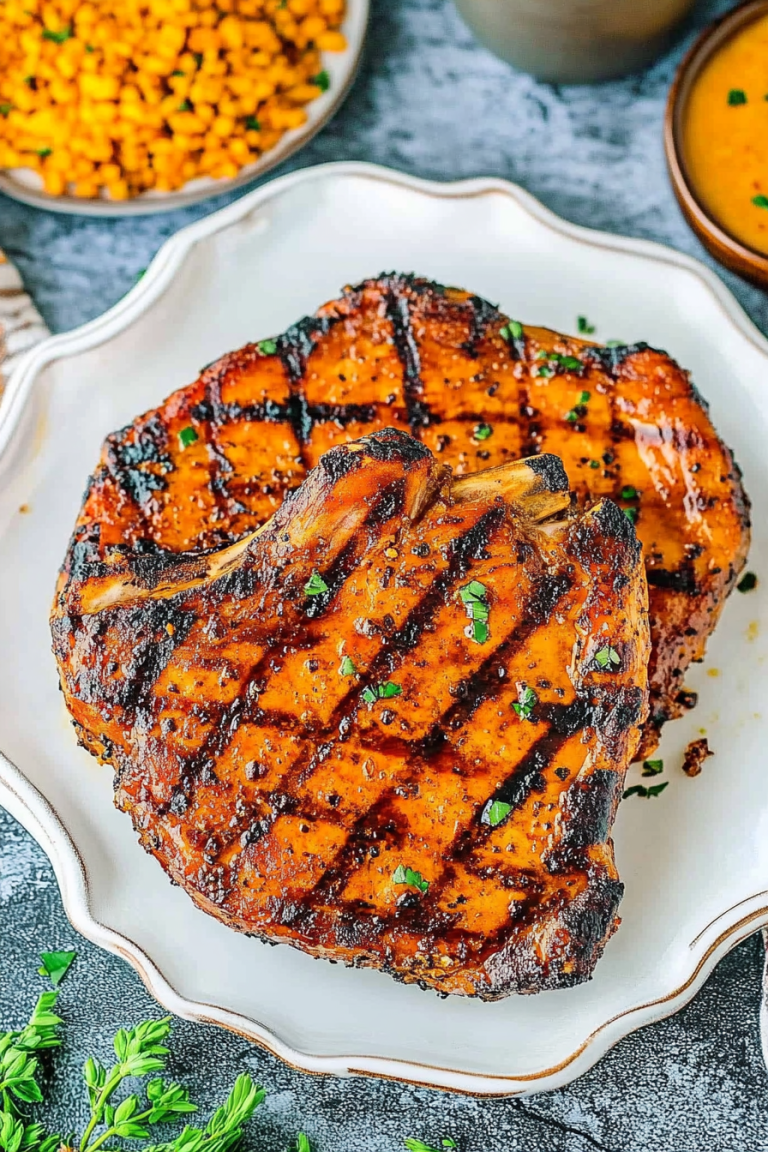
French Onion Pork Chops
Ingredients
Main Ingredients
- 2 large yellow onions halved and sliced vertically into 1/4-inch slices
- 4 tablespoons unsalted butter
- 0.25 cup reduced sodium beef broth + 1 cup reduced sodium beef broth (use 1 cup total)
- 1 tablespoon olive oil
- 4 boneless pork chops 1 to 1.5 inches thick
- 1 teaspoon salt
- 0.5 teaspoon freshly ground black pepper
- 0.5 teaspoon garlic powder OR 1 teaspoon fresh garlic (finely minced)
- 0.5 teaspoon dried thyme OR 2 sprigs fresh thyme
- 0.25 teaspoon dried rosemary OR 2 sprigs fresh rosemary
- 1 tablespoon all-purpose flour
- 0.75 cup dry white wine or reduced sodium chicken broth
- 0.25 cup Gruyere cheese finely shredded
- 0.25 cup Swiss cheese finely shredded
Instructions
Preparation Steps
- To a large, heavy-bottom skillet or braising pan, add the onions, butter, and cook over medium heat for about 5 minutes to melt the butter; stir nearly constantly until butter melts.
- Reduce the heat to medium-low and add 1/4 cup reduced sodium beef broth.
- Evenly season the pork chops on both sides with the salt, pepper, garlic powder (or fresh garlic), dried thyme (or fresh thyme), and dried rosemary (or fresh rosemary).
- Select Option 1 (faster, 2 skillets) OR Option 2 (slower, 1 skillet) for caramelizing onions. (For 1 skillet method: Cook the onions for about 30 to 45 minutes over medium-low to low heat, or until the onions have caramelized and are a nice, deep brown color; stir intermittently. When the onions are done and have caramelized, remove them from the skillet, and set them aside on a plate. To the skillet, add the olive oil, pork chops, and sear over medium-high heat for about 3 minutes per side. Take them out and set them aside on a plate. They will not be done at this point.)
- Add the flour to the pan juices and cook over medium-high heat for 1 minute; whisking nearly constantly to create a roux.
- Add the remaining 1 cup beef broth and the white wine (or chicken broth), and whisk to combine. Use caution when adding liquids as they will bubble up vigorously.
- Add the caramelized onions back into the skillet and stir to combine and coat with the broth-wine mixture.
- Turn the heat to medium-low, add the pork chops back in, evenly distribute and sprinkle both cheeses over the top of all the pork chops, and nestle the chops in the onions. Simmer for another 10 minutes, or until pork is done. Covering with a lid can help the cheese melt faster.
- Pork is done when the thickest part reads 145F according to a digital thermometer. It's suggested to remove the pork from the skillet at about 140F, and allow it to rest on a platter covered with foil for carryover cooking.
- Serve immediately, as this recipe is best enjoyed warm and fresh.